The short version
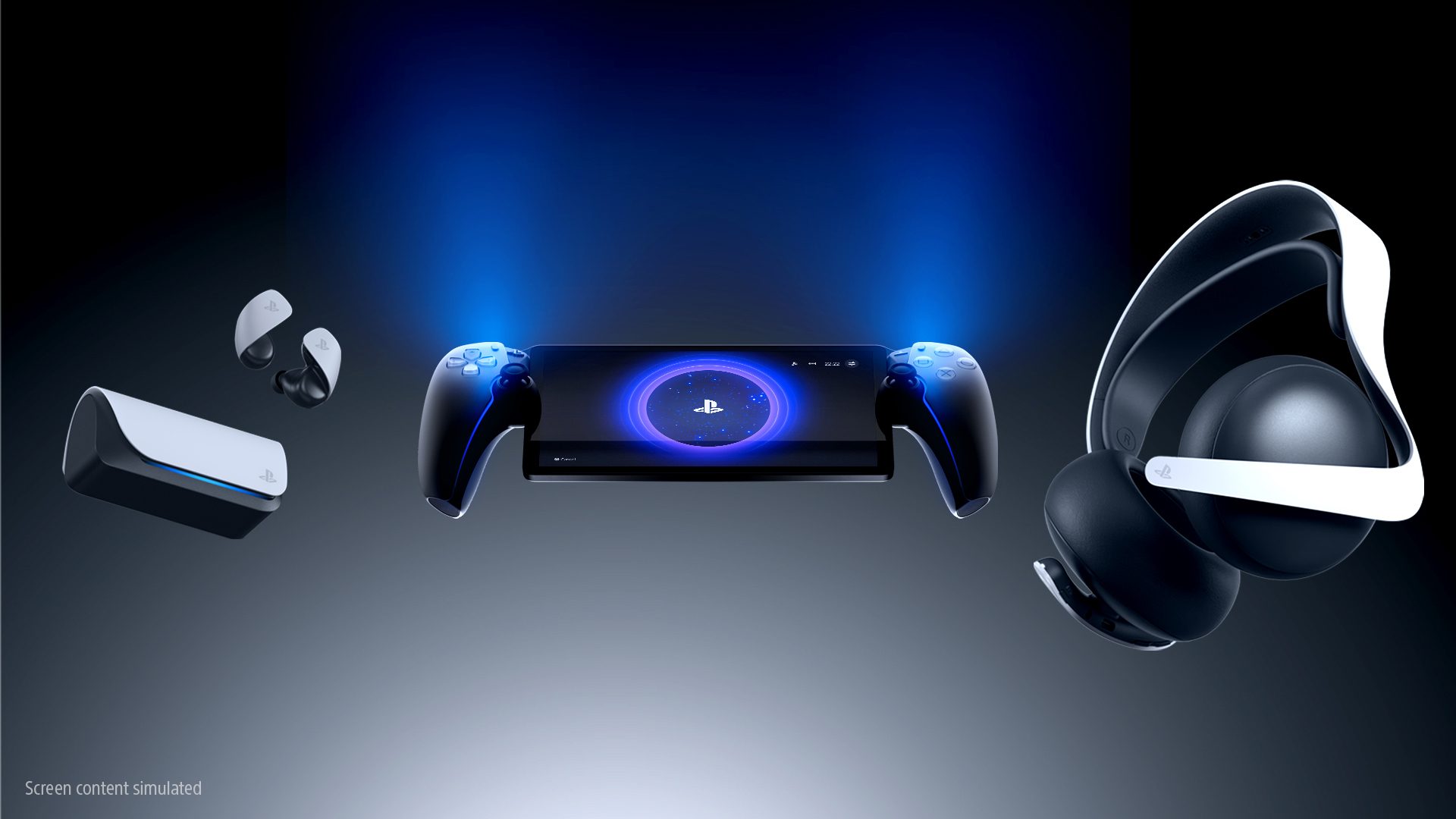
- Digital Foundry's Richard Leadbetter says he's heard "behind the scene discussions" that Sony has "an exclusive of sorts" on RDNA 5 for handhelds. RDNA 5 is AMD's next graphics design.
- The reported reason isn't a contract. It's that AMD only builds a custom handheld chip for companies that can order huge volumes, and Sony can.
- Leaks put Sony's handheld, reportedly called Project Canis, at six Zen 6 cores, 16 RDNA 5 compute units and 24GB of memory, for late 2027.
- None of this is confirmed. Sony hasn't announced a handheld, and there's no price, India or otherwise.
What was said
The claim comes from a Patreon-only episode of the Digital Foundry Direct podcast, reported by Wccftech on October 26. Leadbetter said there were behind-the-scenes discussions suggesting Sony "has an exclusive of sorts on RDNA5 for handheld".
The "of sorts" matters. Nobody is claiming Sony signed a deal that blocks AMD from selling RDNA 5 to others. The idea is that Sony may simply be the only company ordering a dedicated, semi-custom RDNA 5 chip for a portable. Other handhelds would make do with whatever AMD sells off the shelf.
If you're not sure what separates those two, our semi-custom chip explainer breaks it down.
How much to trust it
Moderately. Leadbetter isn't a leaker. He's a hardware journalist with a long record on console tech, and he framed this as something he'd heard, not a fact. Wccftech rates the rumour "probable", but that's its own judgement, and nobody else has independently backed it up yet.
The surrounding claims are shakier:
- The 10 million chip figure. Leaker Kepler_L2 says AMD would want Microsoft to commit to at least 10 million chips before designing a dedicated Xbox handheld processor. A similar 10 million claim did the rounds in October 2025, and Windows Central's Jez Corden called it "not even slightly true" at the time.
- The specs. These come mostly from GameGPU and earlier from Moore's Law is Dead. Even the blogs that report them say to take them with a pinch of salt.
The leaked PS6 handheld specs
Here's what's been reported for Canis, next to two machines you can actually buy:
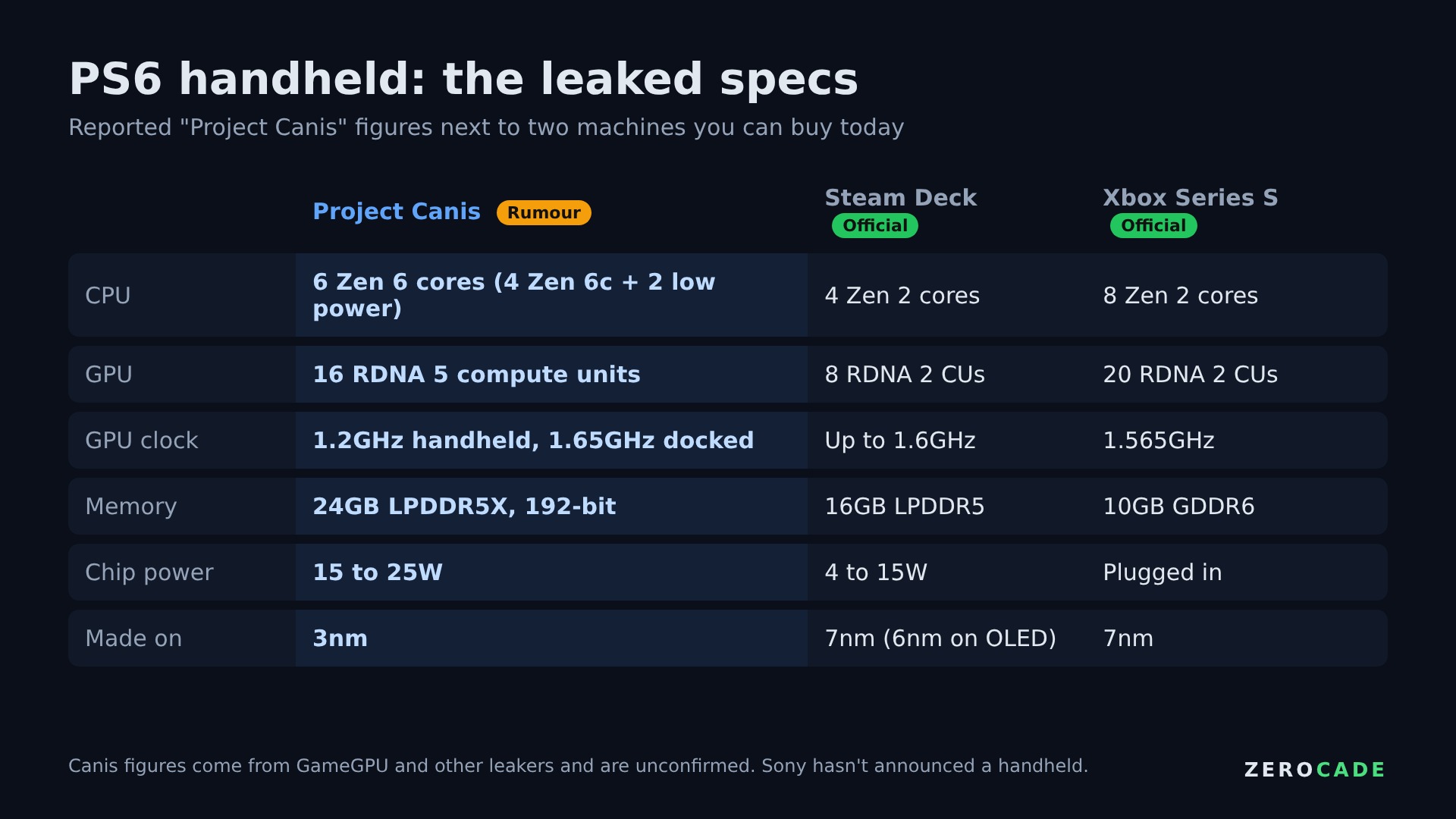
Image: Zerocade
On paper, a few things stand out:
- The CPU is reported as four Zen 6c cores plus two low-power Zen 6 cores, on a 3nm process. That's a newer design and a smaller process than anything in a handheld today. Our process node explainer covers why that helps battery life.
- The GPU is reported at 16 compute units, running at 1.2GHz handheld and 1.65GHz docked. GameGPU puts that at 4.91 TFLOPS handheld and 6.75 TFLOPS docked. TFLOPS don't compare cleanly across generations, though, as our TFLOPS explainer explains.
- The resolution is the surprise. It reportedly renders at 540p internally and uses PSSR 3.0, a newer version of Sony's AI upscaler, to get to 1080p with frame generation.
- The memory is 24GB of LPDDR5X on a 192-bit bus, more than the Steam Deck's 16GB.
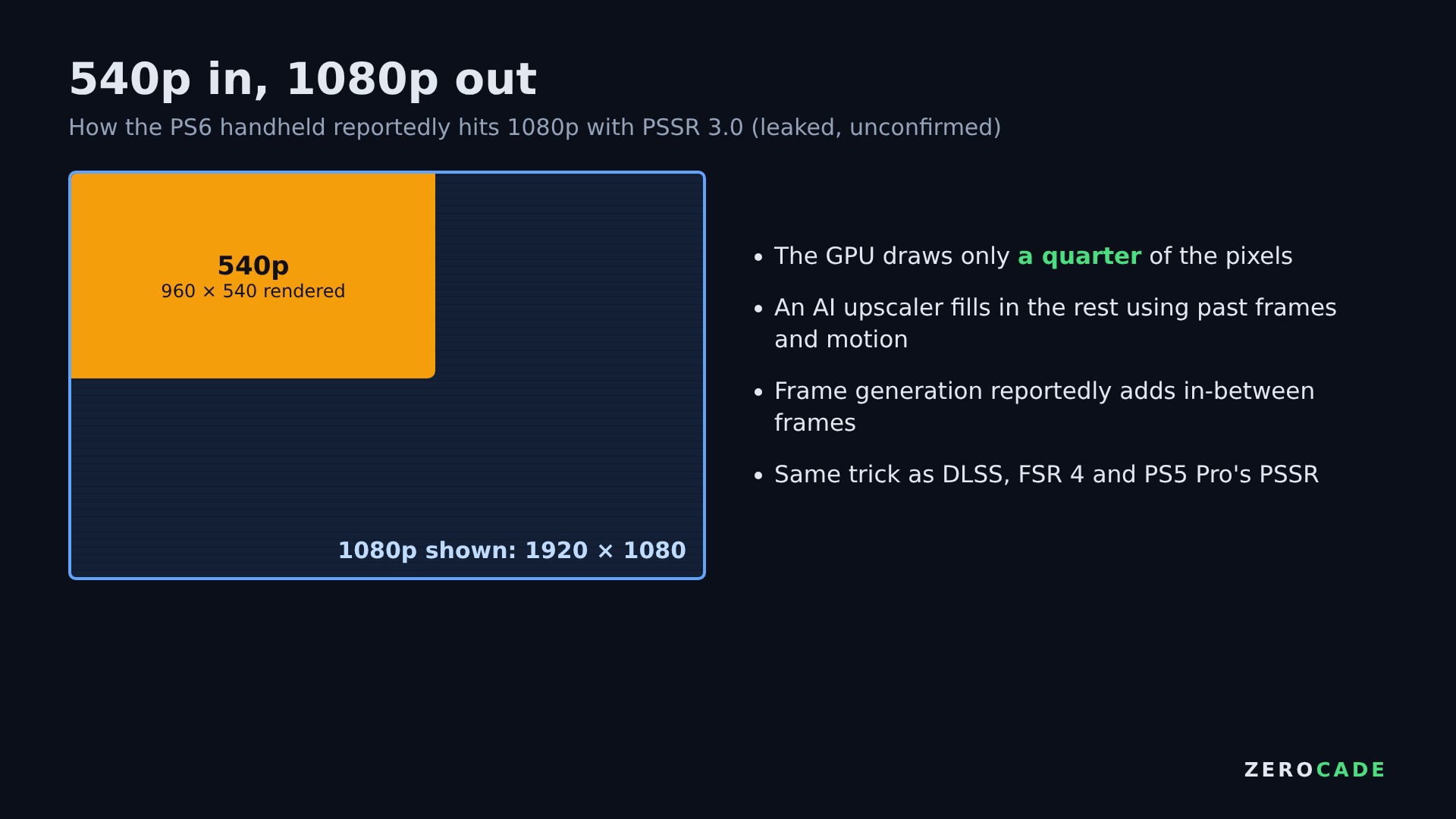
Image: Zerocade
There's an interesting overlap with a leak from last week. An AMD test chip with six Zen 6 cores and 24GB of memory turned up in a benchmark database, and many people assumed it was for a Steam Deck 2. The core count and memory match the Canis leaks, though nobody has linked the two.
Why volume decides who gets a custom chip
Designing a one-off chip costs a lot before a single unit is made. AMD has to lay out the design, test it, and pay for the masks used to print it. That bill is the same whether the customer sells 1 million devices or 50 million, so AMD wants it spread over a lot of units.
Sony's numbers make that easy. The PS5 and Xbox Series X|S have sold a combined 120 million consoles, and PlayStation has the bigger share. A handheld that plays PS6 games could sell at console scale.
Microsoft's handheld story has been different so far. The ROG Xbox Ally (₹69,990) and ROG Xbox Ally X (₹1,14,990) are made by ASUS with off-the-shelf Ryzen Z2 chips, and a first-party Xbox handheld has been the subject of mixed reports. Valve's Steam Deck used a custom AMD chip, but its sales are estimated in the millions, not tens of millions. It also isn't officially sold in India.
What it means if you're waiting
If the leaks are right, Sony's handheld would have a real edge: newer graphics hardware tuned for one machine, plus Sony's own upscaler. Other Windows handhelds would likely stick with off-the-shelf AMD chips, which are good but not built for a single device.
For context on price, the PS5 disc model costs ₹69,990 in India, and memory costs are pushing next-gen console prices up. A handheld with 24GB of memory won't be cheap.
What to watch next
Sony's next big moment is likely a PS6 reveal, and the handheld may come with it. Until then, look for AMD to say more about RDNA 5 at its own events, and for more benchmark listings with six Zen 6 cores and 24GB of memory. If one names a Sony part, the rumour gets a lot stronger.