The short version
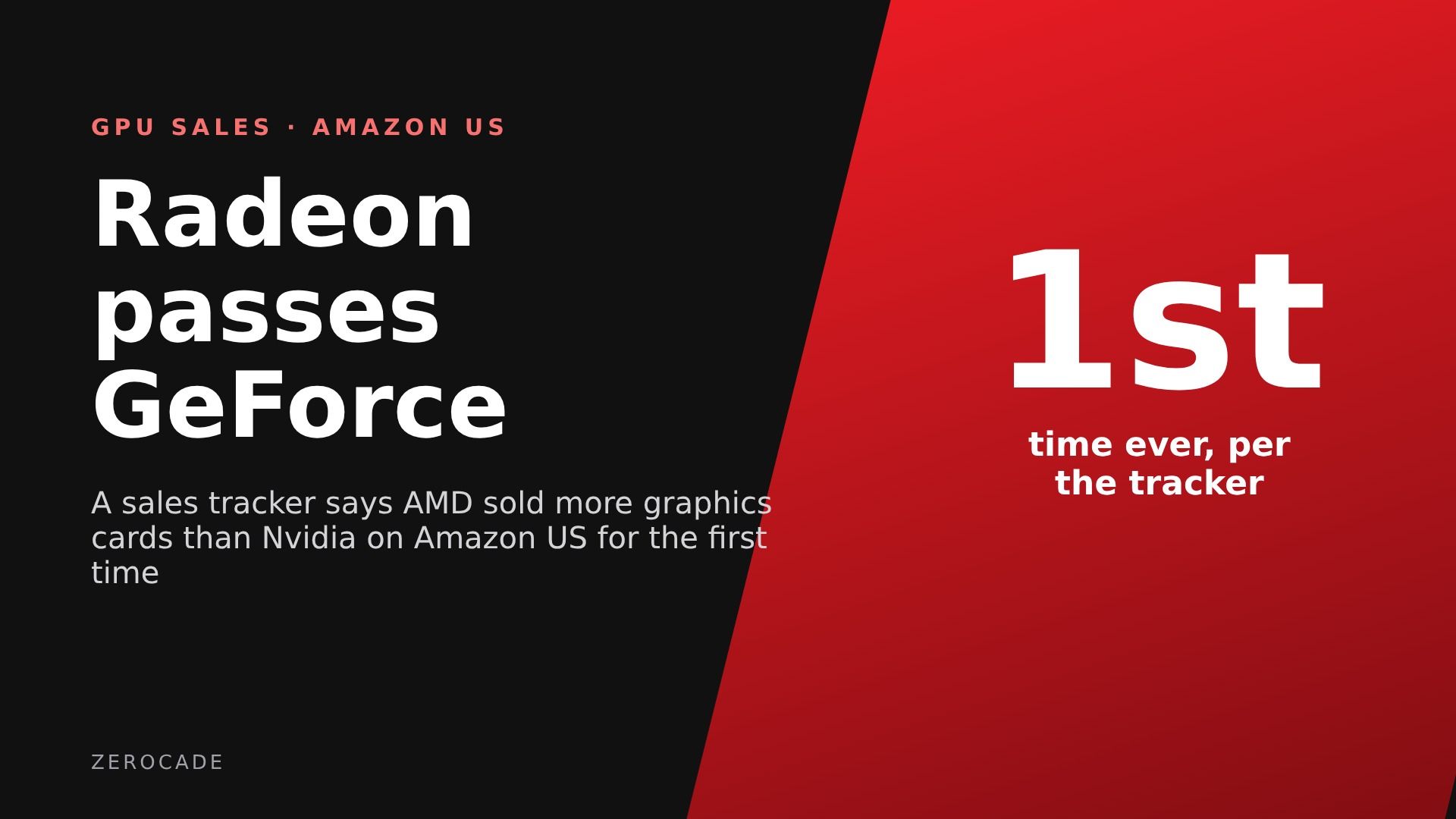
- TechEpiphany, an X account that tracks Amazon CPU and GPU sales, says AMD sold more graphics cards than Nvidia on Amazon US for the first time.
- No unit totals or shares were published for the latest result, and the data isn't audited. Treat it as a strong signal from one store, not market share.
- The earlier figures show the gap closing fast: Nvidia had 70.5% of units in June 2025, then 57.4% in July 2026 and 47.8% in August.
- The likely reason is price. An RTX 5060 Ti 16GB that launched at $429 (about ₹40,800) now sells above $700 on Amazon US.
What the tracker says
Notebookcheck picked up the claim on November 4: according to TechEpiphany, AMD "overtook Nvidia in GPU unit sales on Amazon US" for the first time. That's all the latest post says. It doesn't give the number of cards sold, the exact period, or each brand's share.
TechEpiphany has been publishing these Amazon snapshots for years, and its CPU charts in particular get cited widely. But its numbers are estimates built from Amazon's public sales data, not figures from Amazon, AMD or Nvidia. PC Gamer has questioned how reliable that kind of data is in the past.
The earlier monthly figures, relayed by WindowsForum and PBX Science, show where this was heading:
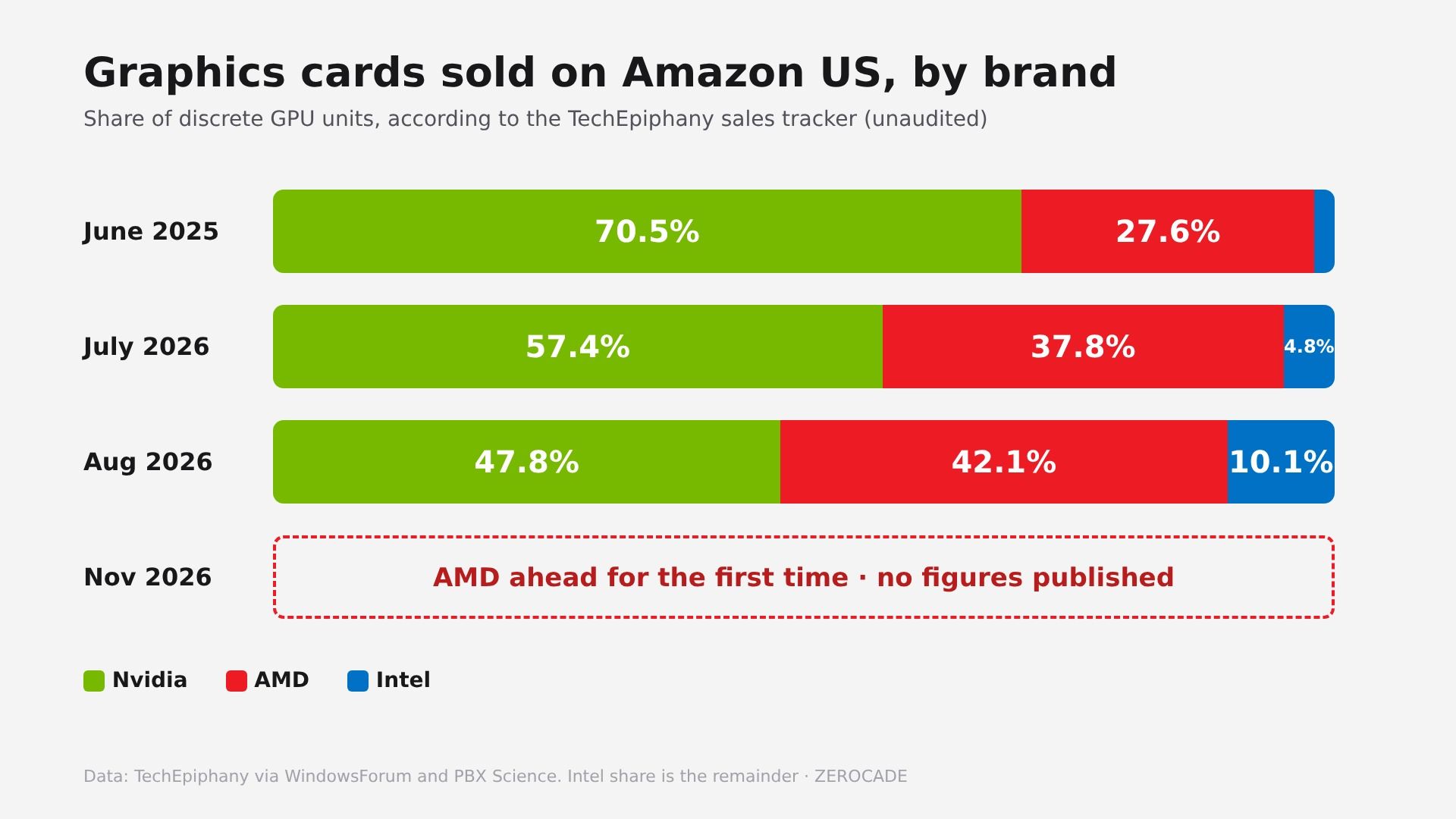
Image: Zerocade
August is the interesting month. Total units fell by about 19% from July, but Nvidia's fell much faster, by about 32%, while AMD's dropped about 10%. Intel passed 10% for the first time, thanks to its cheaper Arc cards. Even then, Nvidia still took about 60% of the money spent, because its cards cost more: in July, the average Nvidia card sold for $927 and the average AMD card for $594.
Why Radeon is selling
It mostly comes down to what's in stock and what it costs. Memory shortages caused by AI servers have pushed up the price of the GDDR7 used on GeForce cards, and Nvidia has passed those costs on to the brands that build its cards. Several GeForce models now cost far more than their launch prices:
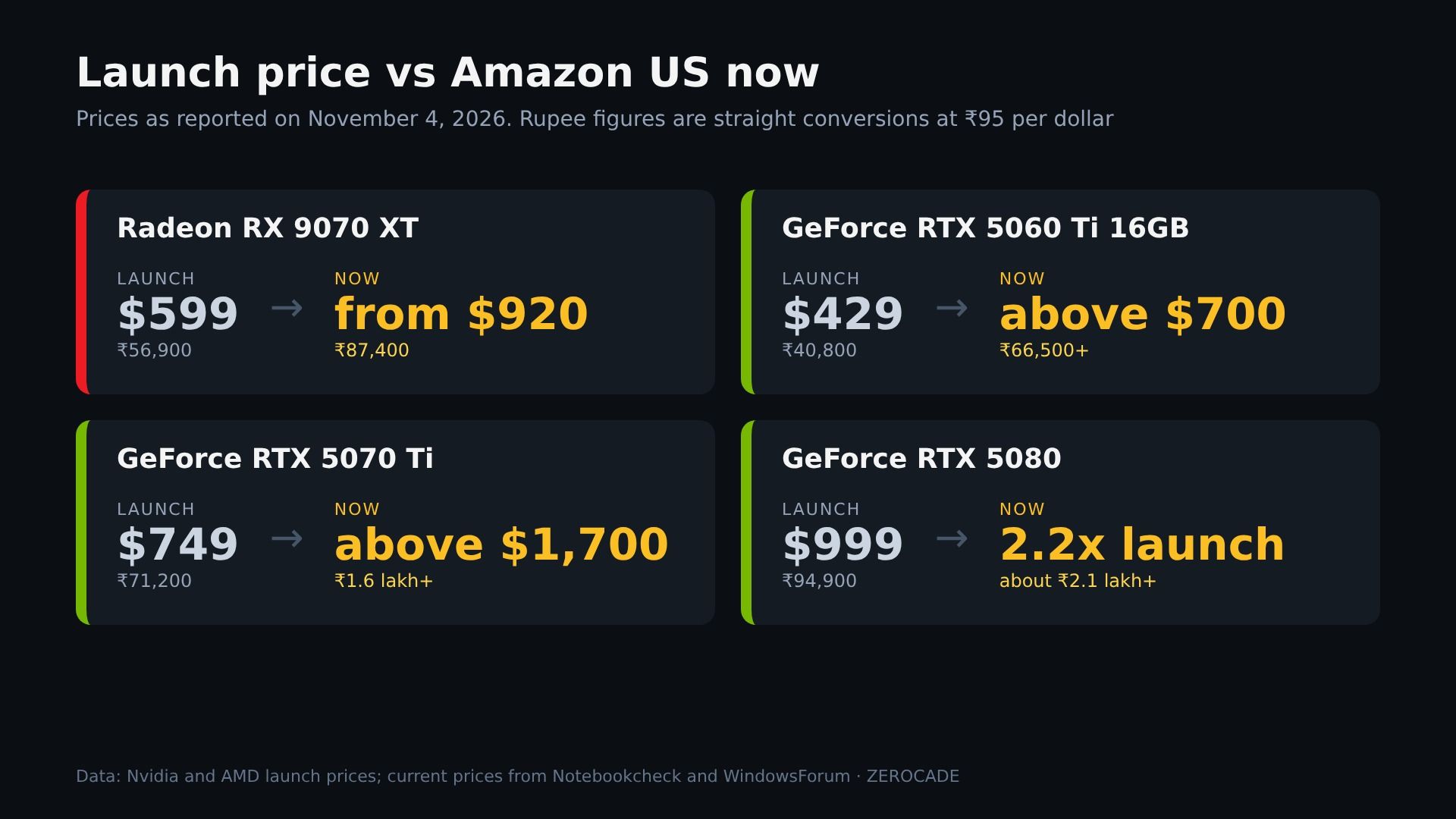
Image: Zerocade
The Radeon RX 9070 XT isn't cheap either. It launched at $599 and now starts around $920 on Amazon US. But it's competing with an RTX 5070 Ti at over $1,700, and that gap is hard to ignore. In WindowsForum's card-level figures, sales of the RTX 5060 fell from about 2,450 units to 600 and the RTX 5060 Ti from 2,650 to 1,100, while the RX 9070 XT held steady at around 4,000.
At the top end, things are even thinner. The RTX 5090 and then the RTX 5080 disappeared from Nvidia's own US store in October. That set off reports that both had been discontinued, but Nvidia's Jeff Fisher said in October that the RTX 5090 hasn't been discontinued and is still shipping in limited numbers. We covered the rumoured replacement in our post on the RTX 5080 24GB.
What this doesn't mean
It's easy to read too much into one retailer. Amazon US is a big store, but it's only a slice of the discrete GPU market, and it says nothing about prebuilt PCs and laptops, where Nvidia is far stronger. Jon Peddie Research put Nvidia at about 90% of add-in graphics card shipments worldwide in the second quarter of 2026. Steam's hardware survey still shows Nvidia in roughly three out of four gaming PCs.
Germany's Mindfactory showed a similar flip in September, with AMD at about 56% of cards sold in one week. But that store has a long history of AMD promotions and bundles, so it tends to lean red anyway.
What it means in India
Indian prices follow the same pressures, often with a delay. If US street prices stay this high, there's little room for GeForce cards to get cheaper here, and AMD has already reportedly raised its own GPU and memory bundle prices for November. On paper, the RX 9070 XT looks like the better value in the mid-range right now, mainly because Nvidia's alternatives have climbed so far.
Watch for the next TechEpiphany update, which should show whether AMD's lead holds once the holiday sales start, and for Nvidia's CES keynote in January.