
What Is PSSR? PlayStation's AI Upscaling Explained
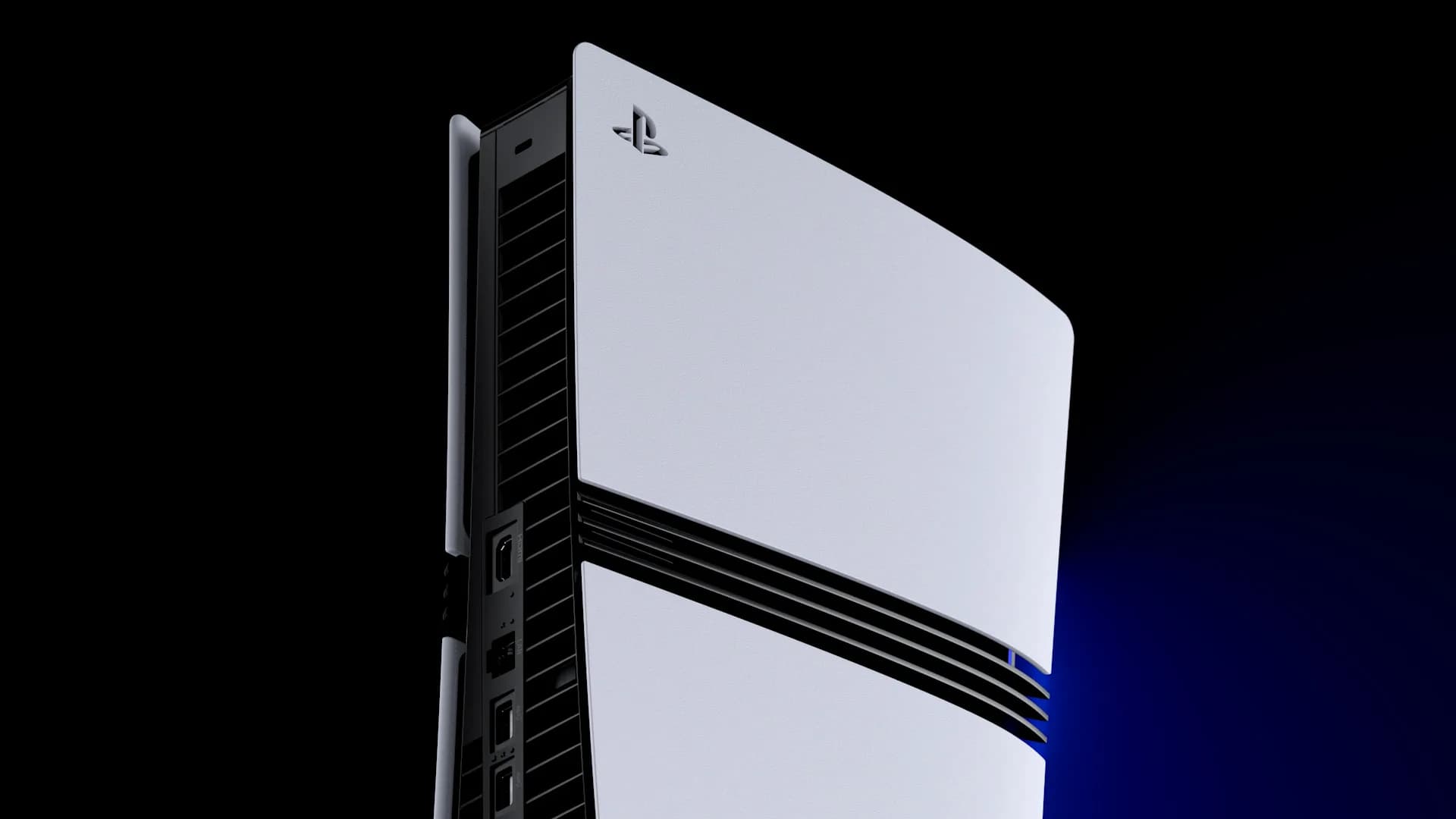
PSSR stands for PlayStation Spectral Super Resolution. It's the AI upscaler built into the PS5 Pro, and it's the main reason the Pro can offer sharper images without giving up frame rate. If you've seen "PSSR" in a game's settings or a patch note and wondered what it actually does, this is the short version.
The Problem It Solves
Rendering a modern game at full 4K, 60 times a second, is expensive. Every pixel has to be lit, shaded and textured, and 4K has four times the pixels of 1080p.
Upscaling is the shortcut. The game renders each frame at a lower resolution, then a separate step rebuilds it at a higher one before it reaches your TV. The power saved can go into a higher frame rate, better ray tracing or more detail.
The catch is quality. Basic upscaling just stretches the image, so it comes out soft. The newer approach is to let a trained neural network fill in the missing detail.
How PSSR Works
PSSR is Sony's own version of that AI approach, in the same family as NVIDIA's DLSS and AMD's FSR 4. (If you're on PC, our DLSS explainer covers the NVIDIA side.)
In Sony's description, PSSR is "an AI library that analyzes game images pixel by pixel as it upscales them." It runs on dedicated machine-learning hardware in the PS5 Pro's GPU. Mark Cerny, the lead architect of the PS5 and PS5 Pro, has put that hardware's peak at 300 TOPS (trillion operations per second), which is what makes running a neural network on every frame possible.
The typical job: take a frame rendered below 4K and output a clean 4K image. The model uses information from previous frames as well as the current one, which helps it keep fine detail stable as the camera moves instead of shimmering.
The 2026 Upgrade
PSSR got its first big overhaul in 2026. Announced on February 27, 2026, the upgraded version uses what Cerny called "a very different approach to not only the neural network but also the overall algorithm." Sony says it's better at notoriously hard details like individual hair strands and fine textures.
Here's how it rolled out:
- Resident Evil Requiem was the first game to use it, on February 27, 2026.
- A PS5 Pro system update in March 2026 brought it to more existing games.
- It's switched on with a console setting, "Enhance PSSR Image Quality", rather than being forced on for everyone.
The new model came out of Project Amethyst, Sony's machine-learning partnership with AMD. Sony says it builds on the work behind AMD's FSR 4, with extra months of tuning specifically for PlayStation.
PSSR vs QSSR
On October 1, 2026, Sony announced a sibling: QSSR (Quick Spectral Super Resolution), a lighter AI upscaler for the standard PS5. The base console doesn't have the Pro's machine-learning hardware, so QSSR uses a slimmed-down network tuned to fit.
Sony's own framing is clear: PSSR "remains the gold standard on PS5 Pro," and QSSR is the best the regular PS5 can do. Our QSSR post covers which games support it so far.
The quick comparison:
- PSSR: PS5 Pro only, full-size model, revealed with the Pro in 2024 and upgraded in February 2026
- QSSR: standard PS5, streamlined model, announced October 1, 2026
Do You Need to Do Anything?
Mostly no. Developers add PSSR to each game, and Pro-enhanced titles use it in their graphics modes. The one setting worth knowing is "Enhance PSSR Image Quality" on the PS5 Pro, which switches supported games to the upgraded 2026 model.
Frequently Asked Questions
Does PSSR work on the regular PS5? No. PSSR needs the PS5 Pro's hardware. The standard PS5 gets QSSR instead, in games that support it.
Is PSSR the same as DLSS? Same idea, different company. DLSS is NVIDIA's AI upscaler for GeForce GPUs; PSSR is Sony's for the PS5 Pro.
Does every PS5 Pro game use PSSR? No. It's up to each developer, and some Pro-enhanced games use other upscaling methods.
Images: Sony Interactive Entertainment.