The short version
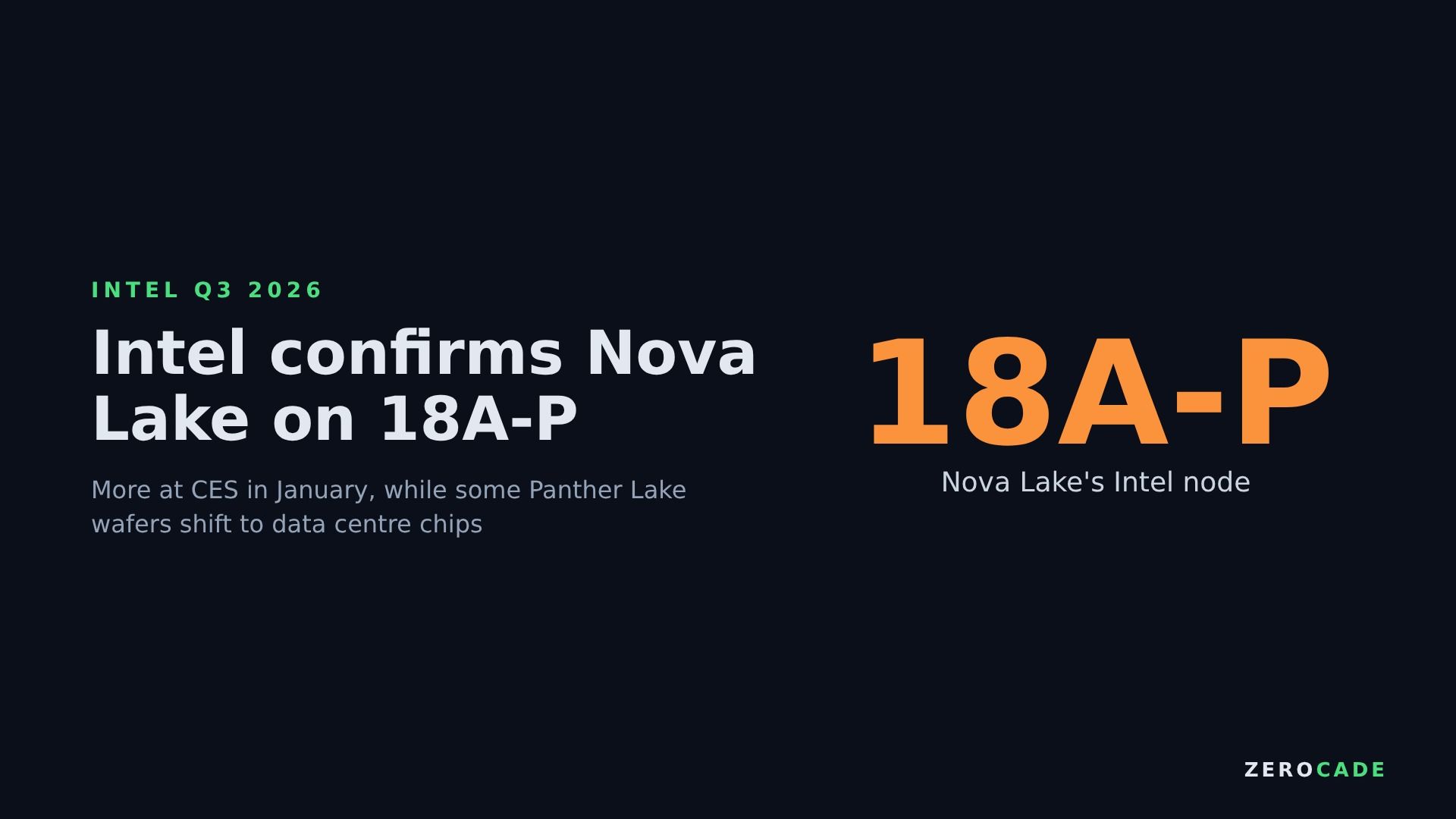
- On October 29, 2026, Intel CEO Lip-Bu Tan confirmed that Nova Lake is the company's first client CPU built on Intel 18A-P. He said it's "tracking ahead of schedule", with more to share at CES in January.
- Intel says 18A-P is about 9% faster at the same power, or uses 18% less power at the same speed, than the 18A process behind current Panther Lake laptops.
- CFO David Zinsner said some 18A wafers that were going to build Panther Lake laptop chips are being taken offline, freeing capacity for more data centre wafers.
- Intel expects PC sales to drop about 12% in 2026 and another 10% in 2027, mostly because memory is scarce and expensive. No Nova Lake prices have been announced, in India or anywhere else.
What Intel confirmed about Nova Lake
Nova Lake is Intel's next big CPU family for desktops and laptops, expected to be sold as Core Ultra 400 series chips on the new LGA 1954 socket. Most of what we knew until now came from leaks, including the 28-core PassMark result and the first LGA 1954 motherboard.
The earnings call added two official facts. First, the node: Nova Lake is "our first Intel 18A-P client product", as Tan put it in his prepared remarks. Second, the schedule is holding. Tan said Nova Lake is ahead of schedule and that Intel expects about twice as many design wins (laptops and PCs built around the chip) as Panther Lake had at its launch. He didn't give a launch date. CES 2027 in early January is where Intel promises more detail.
What Intel didn't say is which parts of Nova Lake use 18A-P. Modern Intel CPUs are built from several tiles, and earlier reports claimed the main compute tile would be made by TSMC on its 2nm-class process. Tom's Hardware notes that it's still speculation whether Intel uses 18A-P for the compute tiles or only for other tiles. Treat any tile split as unconfirmed until CES.
What 18A-P improves over 18A
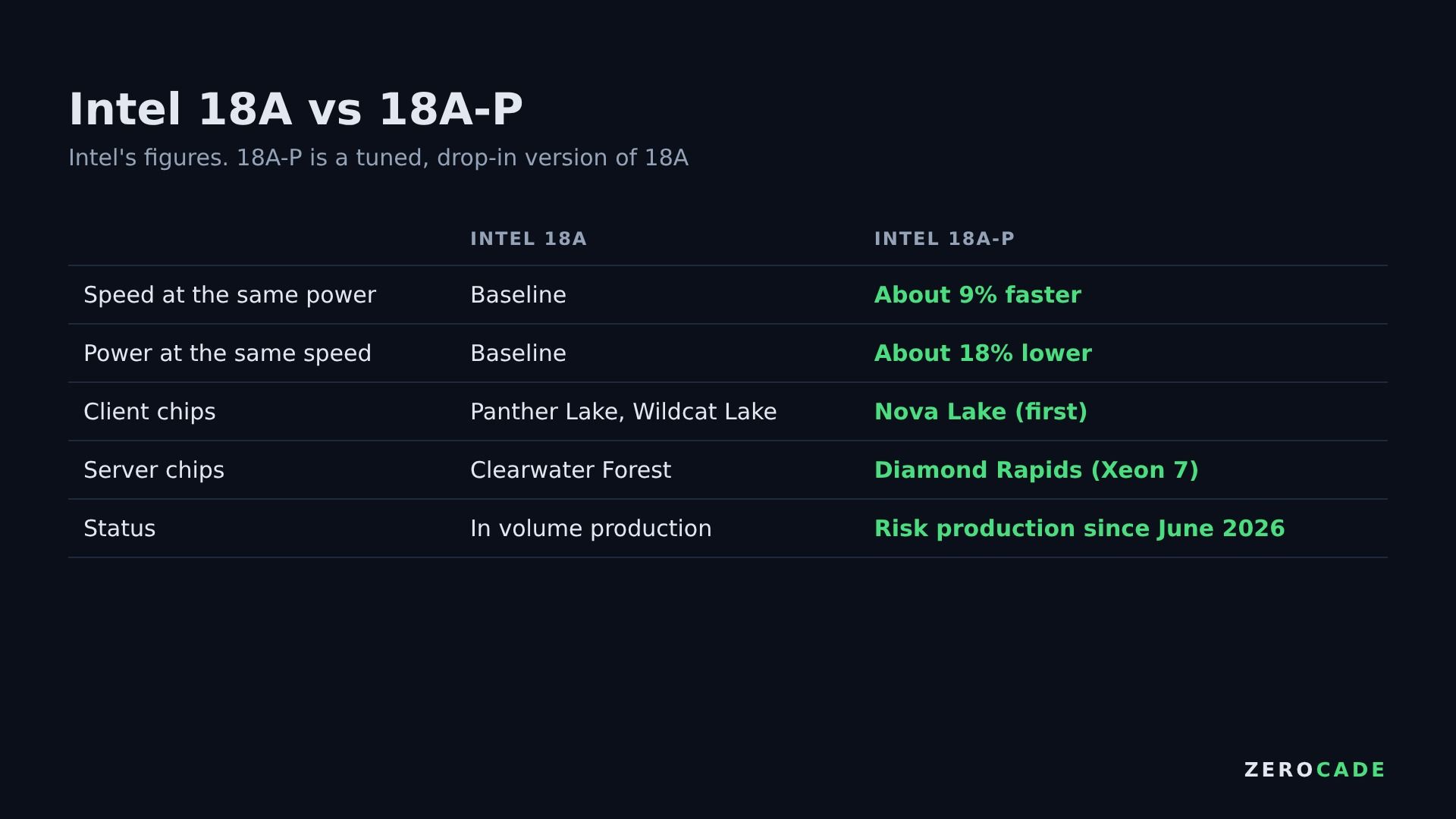 Image: Zerocade
18A is the process node Intel uses for Panther Lake (Core Ultra series 3) laptop chips and the budget Wildcat Lake chips. 18A-P is a tuned version of the same node. Intel's figures are a 9% speed gain at the same power, or an 18% power cut at the same speed. You get one or the other, or a mix, not both at once.
The important detail for Intel is that 18A-P is a "drop-in replacement" for 18A. Chips designed for 18A can move to 18A-P without a redesign, which lowers the risk for Nova Lake. Intel said in June 2026 that 18A-P had entered risk production, the early stage before mass production. At Hot Chips in August, it named the Xeon 7 Diamond Rapids server chip as its first 18A-P product. If you want a refresher on what these node names mean, our process node explainer covers it.
 Image: Intel Corporation
Why some Panther Lake wafers are moving to servers
This is the part that matters for laptop buyers. Zinsner said Intel is taking some 18A wafer capacity offline. That capacity "was generally going to build Panther Lake products", and the change frees up room to produce more data centre wafers. Tom's Hardware reads this as more Granite Rapids Xeon chips, which are built on Intel 3. Intel's own call quote only says "data center wafers".
The reason is simple: data centre chips are where the money is right now. Intel's data centre and AI division grew 78% year on year to $7.3 billion in the quarter, its fastest growth in 15 years. Client chips for PCs fell 5% to $8.1 billion. Tan said Intel's immediate priority is unlocking more supply for Xeon.
Intel didn't say how many fewer Panther Lake chips it will make. Tan did say demand for Wildcat Lake is "outstripping supply". Intel also said 18A chips now make up about a third of its client CPU revenue, up from under 5% in the first quarter.
Intel's Q3 2026 numbers
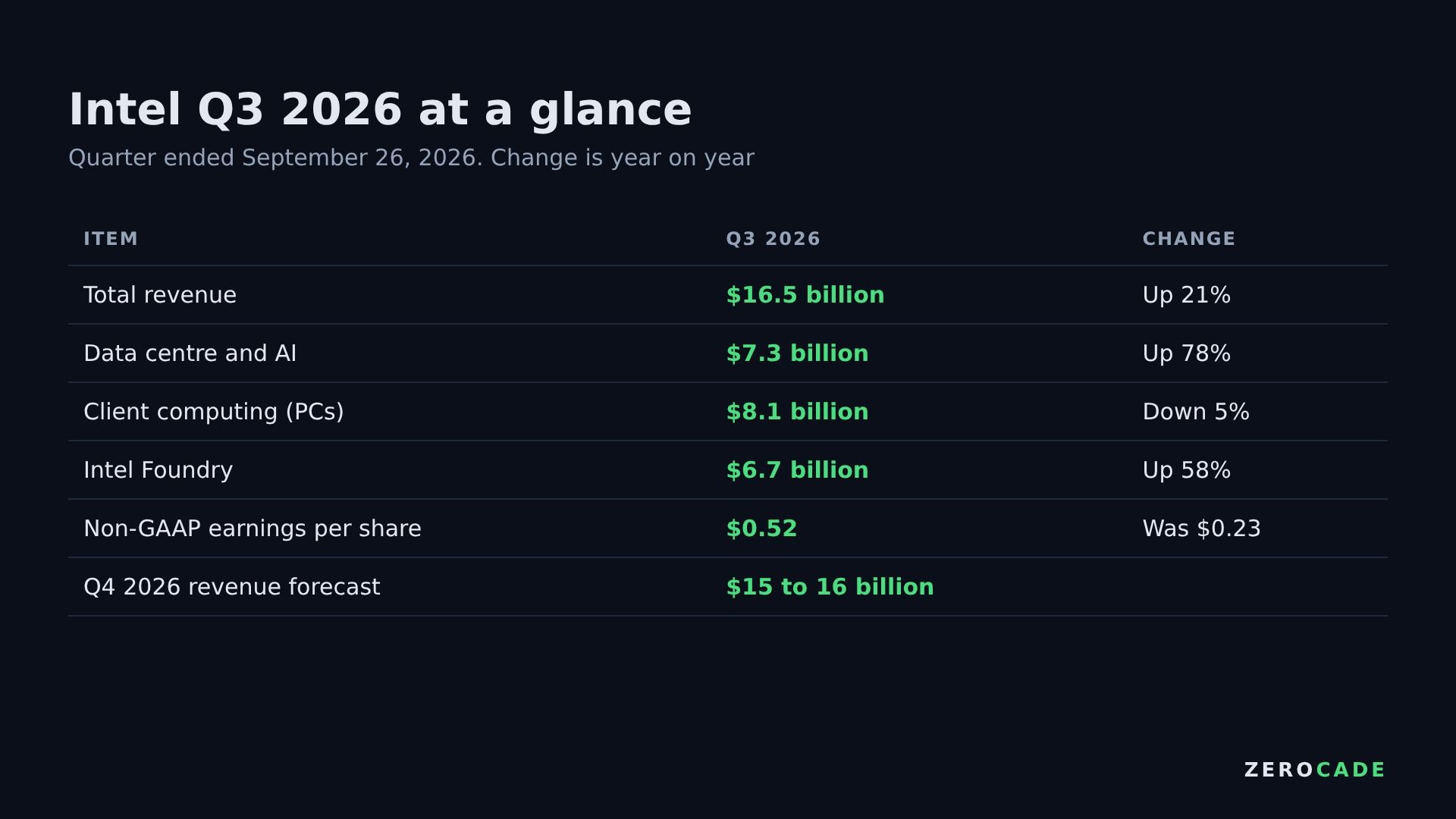 Image: Zerocade
Total revenue was $16.5 billion (roughly ₹1.57 lakh crore), up 21%, and ahead of Intel's own forecast. Non-GAAP earnings per share came in at $0.52, up from $0.23 a year earlier. For the October to December quarter, Intel expects revenue of $15 billion to $16 billion.
The PC outlook is gloomier. Zinsner expects the PC market to shrink about 12% in 2026, with second-half shipments down more than 20%. Intel is planning for another drop of about 10% in 2027. He blamed memory: Intel doesn't expect a sustained recovery "until memory availability improves and pricing begins to normalize". That's the same RAM squeeze we've covered in our SK hynix shortage report.
What it means for you
On paper, Nova Lake is on track and on a better node than Panther Lake, which is good news for anyone waiting to build a new Intel desktop. The catch is supply. With Intel moving wafers to servers and PC demand already weak, new laptops on Panther Lake may stay harder to find, or slower to get cheaper, than usual.
The next date to watch is CES 2027 in early January, when Intel says it will share more about Nova Lake, including the chips, and possibly launch timing.