The short version
- SK hynix reported its July to September 2026 results on October 28: revenue of ₩104.6 trillion (roughly ₹7.4 lakh crore), up 328% in a year, and operating profit of ₩83.3 trillion.
- Its operating margin hit 80%, a company record. For comparison, that was 47% a year ago.
- The company says it expects demand for memory to exceed supply through 2030.
- It has signed long-term supply deals with 14 big customers, covering more than half of its total production capacity for 2027 and 2028. That's memory already spoken for before it's made.
What SK hynix reported
SK hynix makes DRAM, the working memory inside every PC, phone, console and graphics card, and it's the biggest supplier of the HBM memory used in AI chips. This was the first quarter it has ever passed ₩100 trillion in revenue.
 Image: Zerocade
The growth came from server DDR5 and HBM4, both sold into AI data centres. Coverage of the call adds that DRAM prices rose by a high-20s percentage compared with the previous quarter, and that server DDR5 shipments climbed by more than 40%.
An 80% operating margin is a very unusual number for a company that makes physical chips in billion-dollar factories. It means that out of every ₩100 of sales, ₩80 was left after paying to make and sell the product. Memory makers normally swing between boom and loss. This is the top of a boom that the company says isn't ending soon.
 Image: Zerocade
The 2030 line, and the long-term deals
The headline claim is in SK hynix's own results release. It "expects the structure in which demand exceeds supply to persist through 2030." Korean press went further, reporting that DRAM and HBM output is effectively sold out through 2029. That wording isn't in the official release, so treat it as reporting rather than a company statement.
What is official is the deal count. SK hynix now has long-term agreements (LTAs) with 14 major customers, including cloud providers, up from 10 a quarter ago. These typically run five years. Prices move with the market but inside ranges agreed with each customer, and together they cover more than 50% of total capacity for 2027 and 2028.
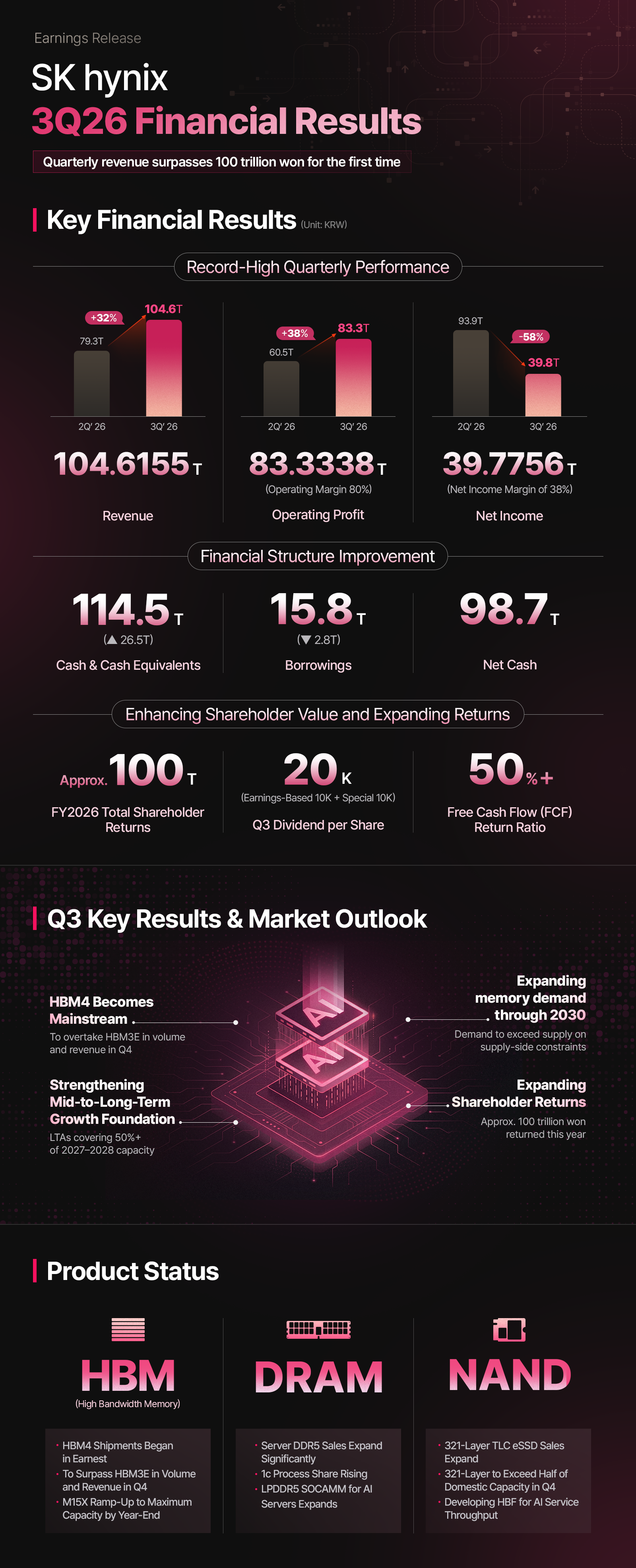 Image: SK hynix
For you, that's the important part. Long-term contracts go to companies that can sign multi-year, multi-billion-dollar orders, and right now those are AI and cloud firms. Memory for consumer gear competes for whatever's left.
Where new supply comes from
SK hynix is building, but slowly enough that it won't fix prices overnight. Its own plans:
 Image: Zerocade
Much of that new capacity is aimed at HBM4 for AI accelerators, not the DDR5 and GDDR7 that go into gaming hardware. The company also says it will adjust the "scale and timing" of investment flexibly, which is how a memory maker avoids building so much that prices crash.
Samsung, the biggest memory maker, reported a record quarter on the same theme. It made about ₩107.4 trillion in operating profit and expects AI memory demand in 2027 to outstrip supply "even more significantly."
What it means for gamers
On paper, none of this is good news for anyone buying hardware in India over the next year:
- PC RAM: A 32GB DDR5 kit that cost $100 to $200 in October 2025 now starts around $450 (about ₹43,000). Our DDR4 vs DDR5 guide explains why older platforms suddenly look sensible again.
- Graphics cards: GDDR7 comes from the same factories. That's the likeliest reason the RTX 5080 now sells for nearly $2,000 in the US and over ₹2 lakh here.
- Consoles: Microsoft just said Xbox sales are limited by supply, and reports already put the PS6 above $1,000 because of memory costs.
- Phones: SK hynix's CFO reportedly expects PC and smartphone shipments to fall as memory prices rise. India's phone market is already at a decade low.
If you're planning an upgrade, the practical takeaway is not to wait for RAM prices to "go back to normal" in 2027. The maker with the best view of its own order book says they won't. Watch Samsung's and Micron's next results for any sign that consumer DRAM supply is loosening, and check our HBM explainer for why AI memory squeezes everything else.