The short version
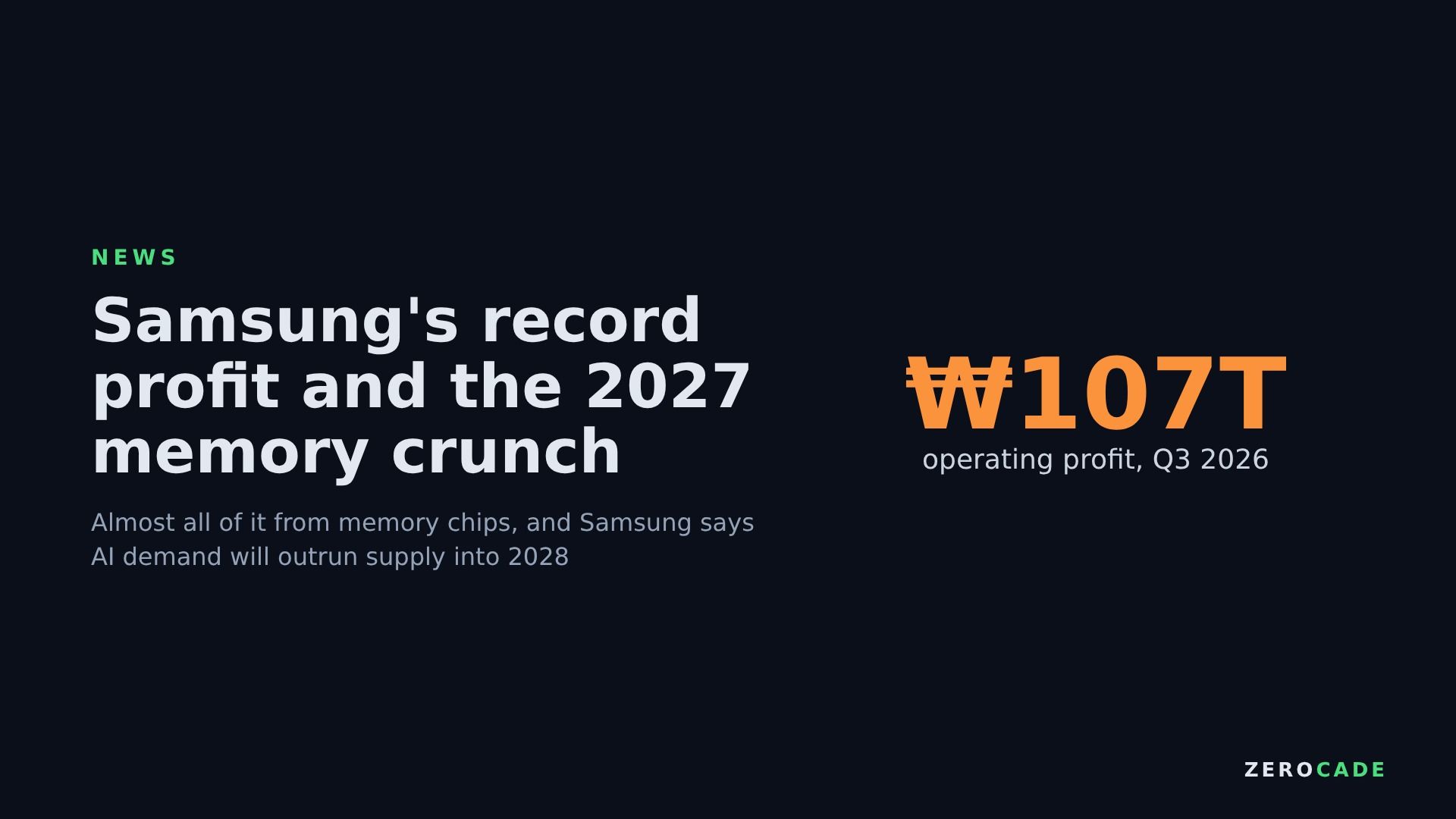
- Samsung reported Q3 2026 operating profit of KRW 107.4 trillion, about ₹7 lakh crore ($80 billion). Samsung says it's the first tech company to pass KRW 100 trillion in a single quarter. Revenue hit a record KRW 195.3 trillion (about ₹12.8 lakh crore).
- About 99% of that profit came from the chip division, driven by AI servers buying memory. The phone business lost money.
- Samsung says AI demand in 2027 will "far exceed" industry supply, and Reuters reports Samsung expects the market to stay tight through 2028.
- That's bad news for anyone shopping for RAM, SSDs, graphics cards or phones. Memory prices have already risen "across all applications", in Samsung's words.
The numbers
Samsung published its results on October 29, 2026. A year ago, Q3 operating profit was KRW 12.2 trillion. It's now almost nine times that.
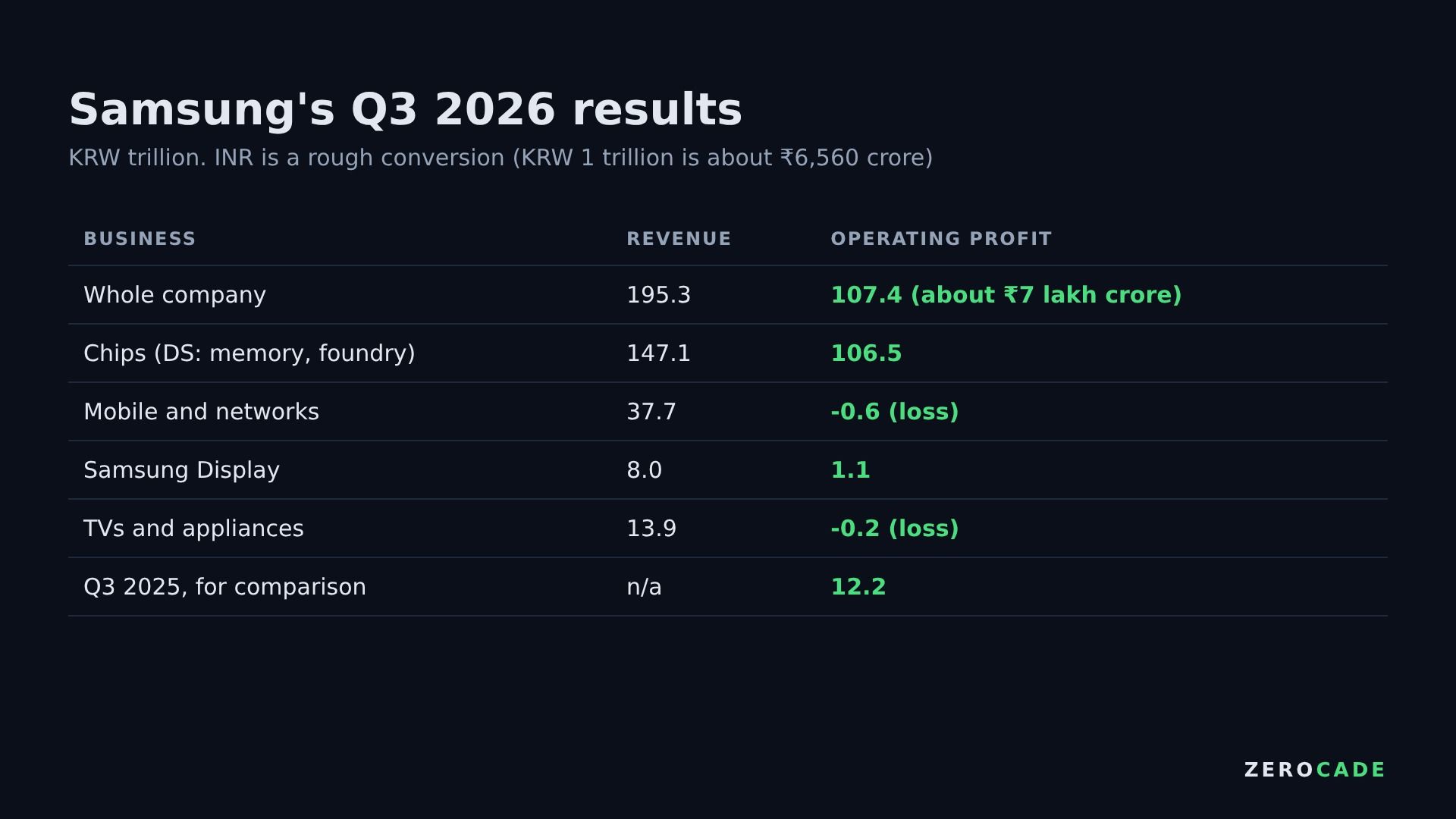 Image: Zerocade
The split tells the story. The DS division, which makes memory and runs Samsung's chip foundry, earned KRW 106.5 trillion of the 107.4 trillion. Memory set records for both revenue and profit. Everything else was flat or losing money:
- Mobile and networks (Galaxy phones and tablets): revenue of KRW 37.7 trillion but an operating loss of KRW 0.6 trillion, about $450 million. Samsung blamed "cost pressures", and memory is one of the biggest costs in a phone.
- TVs and appliances: a KRW 0.2 trillion loss.
- Samsung Display: KRW 1.1 trillion profit on KRW 8 trillion revenue.
In short, Samsung's own phone division is paying more for the memory its chip division sells. Investors weren't thrilled either: shares fell as much as 6.2% on the day, partly because the payout decision was pushed to January.
Why memory is so profitable right now
AI data centres need huge amounts of two kinds of memory. HBM (high-bandwidth memory) is stacked right next to AI chips like Nvidia's. Our HBM explainer covers how it works. Servers also need a lot of fast DDR5.
HBM uses far more silicon per gigabyte than normal RAM. So every wafer a memory maker turns into HBM is a wafer that doesn't become laptop RAM, phone memory or a console's GDDR. With only three big DRAM makers, Samsung, SK Hynix and Micron, there's no spare factory to cover the gap.
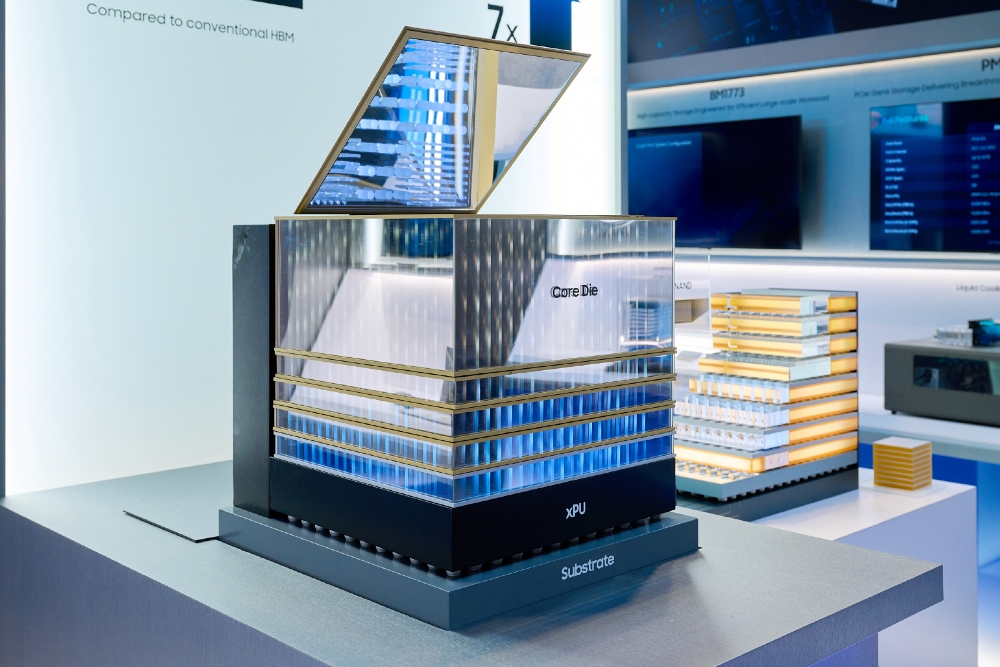 Image: Samsung
What Samsung said about 2027 and 2028
Samsung's release says it "significantly scaled up" HBM4 sales this quarter, and Reuters reports its HBM supply is sold out for 2027. On the earnings call, as reported by Wccftech, memory sales head Jaejune Kim said:
- HBM4E mass production starts in the first half of 2027, ramping up in the second half.
- Demand is strong for server DDR5 at 8,000 Mbps and faster.
- Next-generation HBM uses bigger chips with more layers, which itself limits how much can be made.
Samsung is also locking customers into long-term agreements (LTAs): multi-year supply deals that guarantee volume. Reuters says Samsung has signed them with 10 major customers, is talking to 10 more, and wants them to cover 60 to 70% of its capacity by 2030. Some headlines said 70% is already secured. That's a target, not today's figure.
Samsung's view is actually calmer than its rival's. SK Hynix has said its memory is sold out through 2029, with shortages lasting to 2030. We covered that in our SK Hynix shortage report.
Spending to catch up
Samsung spent KRW 29 trillion on new equipment and factories in Q3, and expects about KRW 84.4 trillion for 2026. Its new fab in Taylor, Texas starts operating in 2027. New factories take years to reach full output, though, so they won't fix 2027 prices.
 Image: Samsung
What it means for gamers in India
Samsung made no statement about consoles or graphics cards. But the pattern is clear. Memory is already a big part of why DDR5 kits cost so much more this year, and why analysts expect a PS6 over $1,000. Phone makers are paying more too, and Samsung's own mobile loss shows they can't absorb it forever.
If you're planning a PC build or an SSD upgrade, nothing in Samsung's outlook points to cheaper memory in 2027. Samsung's next update on shareholder returns comes in late January 2027, alongside its Q4 results.