The short version
- A game goes gold when the version that will launch is finished and sent off to be made into discs and store downloads.
- Before that come alpha (everything is in, but rough) and beta (content is locked, bugs get fixed).
- After gold, console games go through certification, where Sony, Microsoft and Nintendo test them against their own rules.
- Work doesn't stop at gold. Fixes made in the weeks before launch usually arrive as a day-one patch.
Why "gold"?
The name comes from the days when the finished build was burned onto a master disc and sent to the factory. Those master discs were often gold-coloured CD-Rs, so the final version became the "gold master." Today most games ship as downloads too, but the phrase stuck. When a studio posts "we've gone gold" on social media, it means the launch build is done and approved.
It's a big moment, because it usually comes a month or two before release. Physical copies need time to be pressed, packed and shipped to shops, and the console makers need time to test the game. That's why gold announcements are such a reliable sign a release date will hold.
The stages before gold
Every studio uses these words slightly differently, but the broad order is the same.
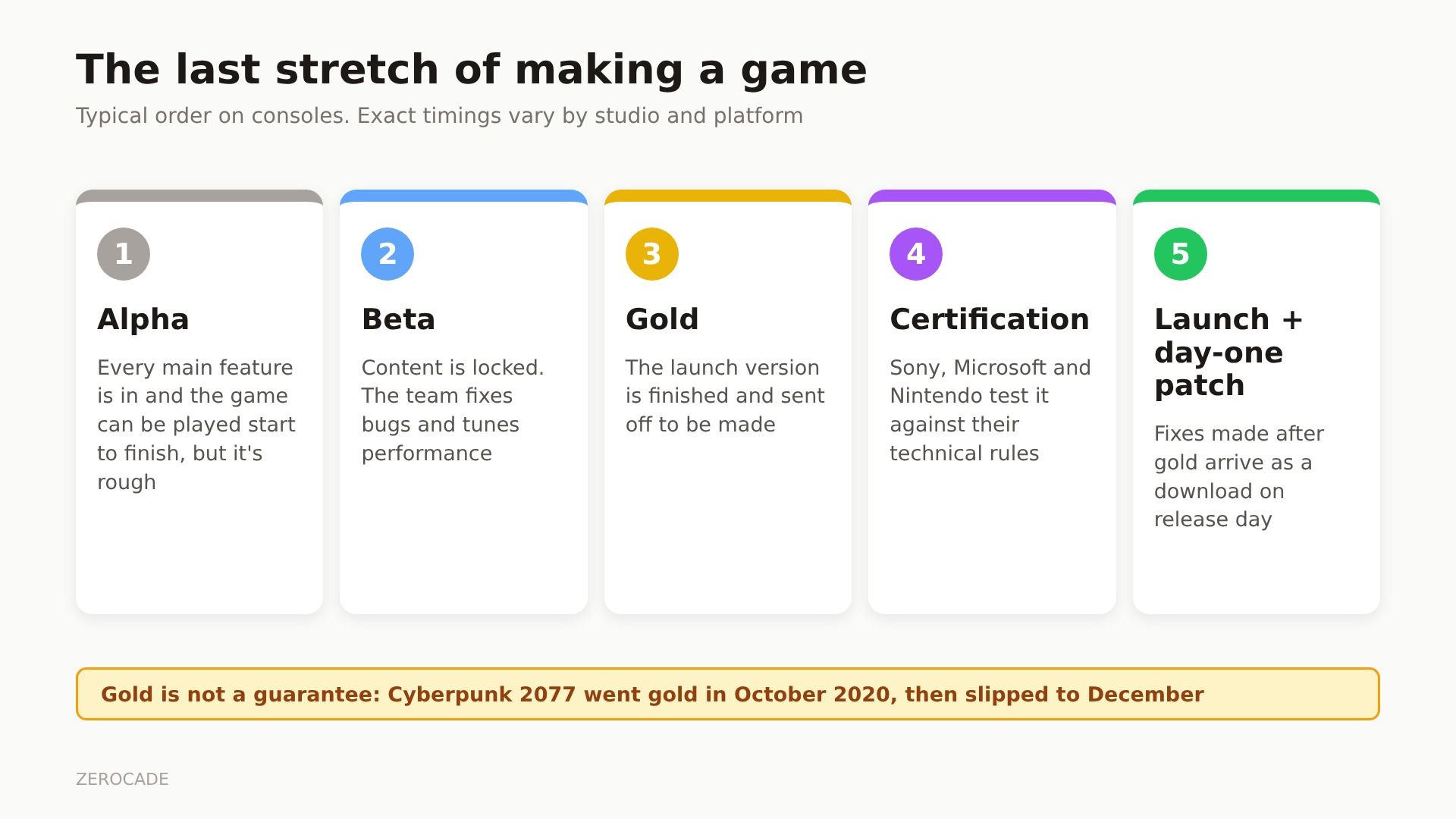
Image: Zerocade
Alpha is the point where every main feature is in the game. You can play it from start to finish, but levels may use placeholder art, systems aren't balanced, and it's full of bugs. Alpha is about making sure nothing big is missing.
Beta is where the content is locked. No new features or levels go in. From here the team mostly fixes bugs, improves performance and tunes difficulty. This is different from the public "betas" you see for online games like Call of Duty or Battlefield, which are really marketing tests and server stress tests run on older builds.
Release candidate is a build the team thinks could be the final one. If testers find nothing serious, it becomes the gold master. If they do, it's fixed and another candidate is made.
What certification is
On consoles, going gold isn't the last step. Each platform holder checks the game against a long list of technical rules before it's allowed in its store.
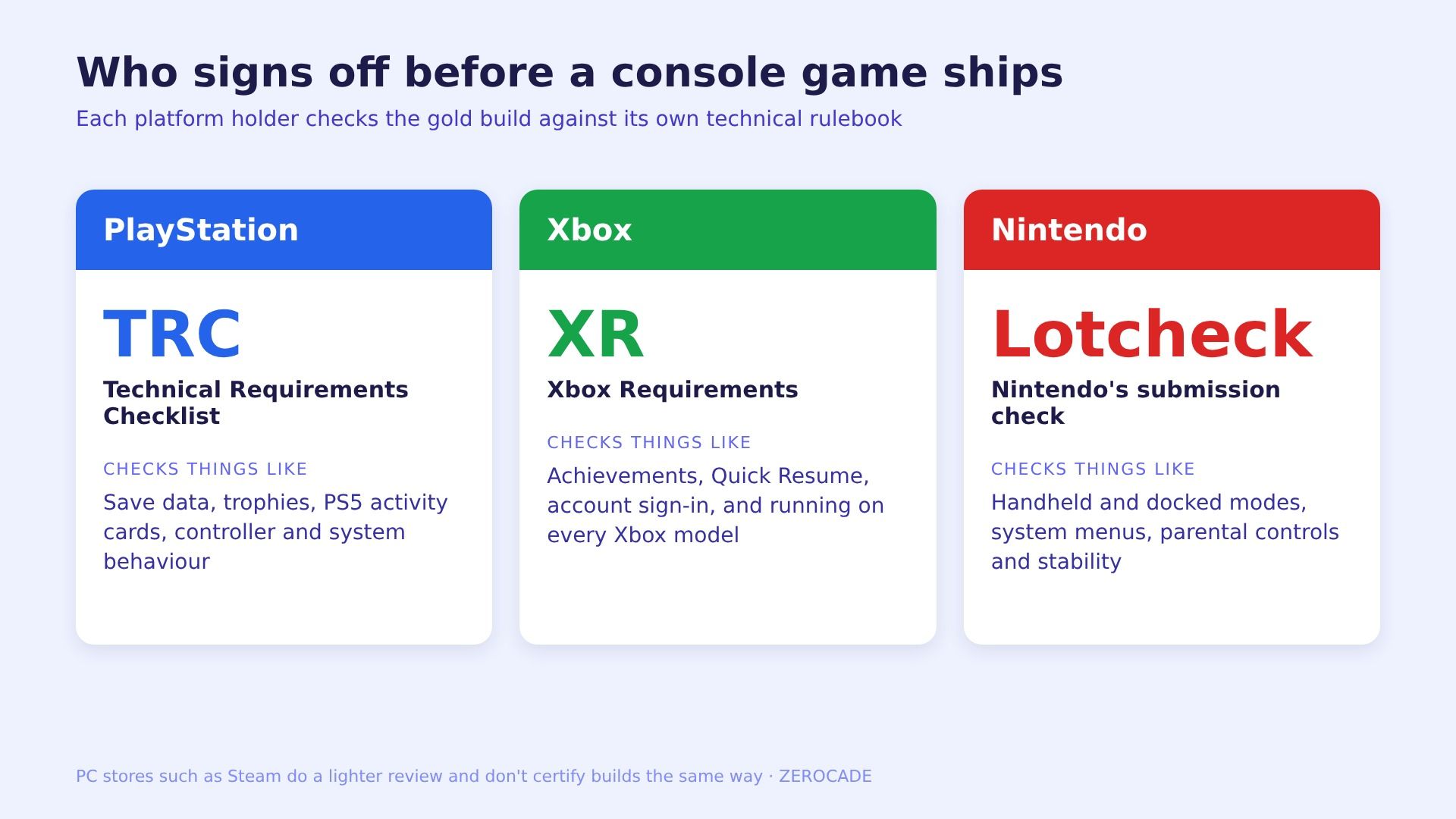
Image: Zerocade
Sony calls its list the TRC, Microsoft uses XR, and Nintendo's process is called Lotcheck. These rules aren't about whether a game is fun. They cover things like how save data works, whether trophies and achievements unlock correctly, what happens if you pull out the controller or the internet drops mid-game, and whether the game runs on every model of the console. On Switch 2, that includes both handheld and docked modes.
If a game fails, it goes back to the studio, gets fixed and is submitted again. Fail too late and the release date is in danger, which is one reason studios aim to go gold well ahead of launch. PC stores like Steam do a much lighter review, which is why PC games sometimes ship with a few more rough edges.
The day-one patch
Here's the part that confuses a lot of players. If the game is finished at gold, why is there a big download on launch day?
Because the team keeps working. Between gold and release there are usually several weeks, and developers spend them fixing bugs that testers found after the gold build was locked. Those fixes can't go on the discs that are already being made, so they ship as a day-one patch. Some of these are small. Others are many gigabytes, which is worth knowing if you're on a slow or capped connection in India: start the download the night before if your console allows pre-loading.
Can a game be delayed after going gold?
Yes, though it's rare. Cyberpunk 2077 went gold in early October 2020, then CD Projekt Red delayed it again from November 19 to December 10 so the team could work on the day-one patch and the many versions it was launching on. Gold only means the disc version is ready, not that the studio is happy.
Most delays, though, happen before gold, while the team is still in beta. That's where God of War Laufey sits: Santa Monica Studio has just moved it from February to May 2027 for "finishing touches," which is classic beta-stage polish. For more on who makes which calls, see our guide to developers, publishers and licence holders.
Next time a studio posts a gold announcement, you can take the release date as close to locked, and expect a patch on day one.