The short version
- The Entertainment Software Association (ESA), the US video game industry group, has asked the US Trade Representative (USTR) to add Anbernic to its yearly Notorious Markets list.
- The ESA calls handhelds sold with preloaded game libraries "the functional equivalent of superfakes", meaning convincing counterfeits.
- Its complaint is about the bundled games, not emulation itself. Brands like Retroid and AYN sell handhelds without games loaded.
- It's only a recommendation. The USTR doesn't have to act, and Anbernic hasn't responded publicly.
What the ESA is asking for
Every year, the USTR publishes a Notorious Markets report naming websites and sellers it sees as harming legitimate trade through piracy or counterfeiting. Industry groups send in nominations. VGC counted about 30 responses when the ESA's filing was reported on October 13.
The ESA's filing asks for Anbernic to be listed, and says its devices "are routinely offered or shipped with removable memory cards preloaded" with games. Its sharpest line: "Anbernic normalizes hardware-based piracy."
Anbernic wasn't the only target. The ESA also nominated whole categories of sites and sellers: cracked game sources and repackers, torrent and piracy hubs, unauthorised digital goods marketplaces, and commercial cheat sellers. Among its requested steps, it wants authorities to treat preloaded game libraries as core evidence of commercial-scale piracy.
 Image: Anbernic
Why "superfakes"?
A superfake is a counterfeit good that's almost impossible to tell from the real thing, a term usually used for luxury handbags and watches. The ESA's argument is that these handhelds look and feel like normal consumer electronics while shipping with huge libraries of unauthorised game copies, so buyers may not realise what they're getting.
It also warns that the firmware comes from opaque supply chains and could contain malware. As an example, it pointed to Italy's Guardia di Finanza (the country's financial police) reportedly seizing about 12,000 Anbernic devices holding more than 47 million pirated games.
Who Anbernic is
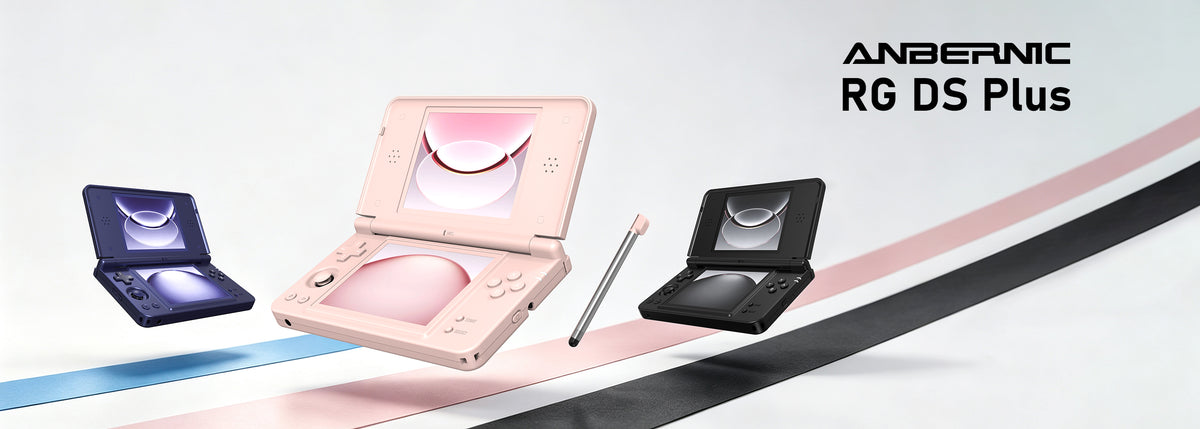
Anbernic has been making retro handhelds since 2017. It releases eight to ten devices a year, many styled after the Game Boy Advance, Nintendo DS, PS Vita and 3DS. Here's what a few cost on its own US store right now:
 Image: Zerocade
Its newest model, the dual-screen RG DDS, went up for pre-order days before the filing at $299.99 (about ₹28,500), with Android 16 and a Snapdragon chip, shipping from December 10. We couldn't find official India pricing for any of them, and most Indian buyers import them.
 Image: Anbernic
The line between emulation and piracy
Emulators themselves are generally legal: they're software that imitates old hardware. What's not legal in most countries is copying and distributing games you don't own the rights to. That's why the ESA is careful to target preloaded libraries, not the devices themselves.
It's also why brands like Retroid and AYN, which sell handhelds with no games on them, aren't named. Their devices run the same kind of emulators, but you load your own legally dumped games. Our emulation explainer breaks down where the line sits.
What could happen
 Image: Zerocade
Probably not much, at least not quickly. USTR listings are a form of public pressure, not a ban. The most likely result, if Anbernic is listed, is US retailers and marketplaces facing pressure to stop selling devices that come with game-loaded cards. That's our reading, not anything the USTR has said, and it's unclear whether the complaint would still apply if Anbernic stopped bundling games.
On paper, the hardware isn't the target. If you own one, nothing changes today.
What to watch: the USTR's 2026 Notorious Markets report, usually published around the start of the year, and whether Anbernic changes how it sells memory cards with its devices.