The short version
- RTX Spark is Nvidia's first laptop chip. It puts an Nvidia Arm CPU and a Blackwell RTX graphics chip on one piece of silicon, with up to 128GB of shared memory.
- Laptops from Microsoft, ASUS, Dell, HP, Lenovo and MSI went on pre-order in the US on October 7 and on sale on October 16, from $2,599.99 (about ₹2.47 lakh).
- India: still no launch date or price as of October 28. The rupee figures here are straight conversions before Indian taxes.
- The CPU is Arm-based, and games that use kernel-level anti-cheat, including Valorant, don't run yet.
What RTX Spark is
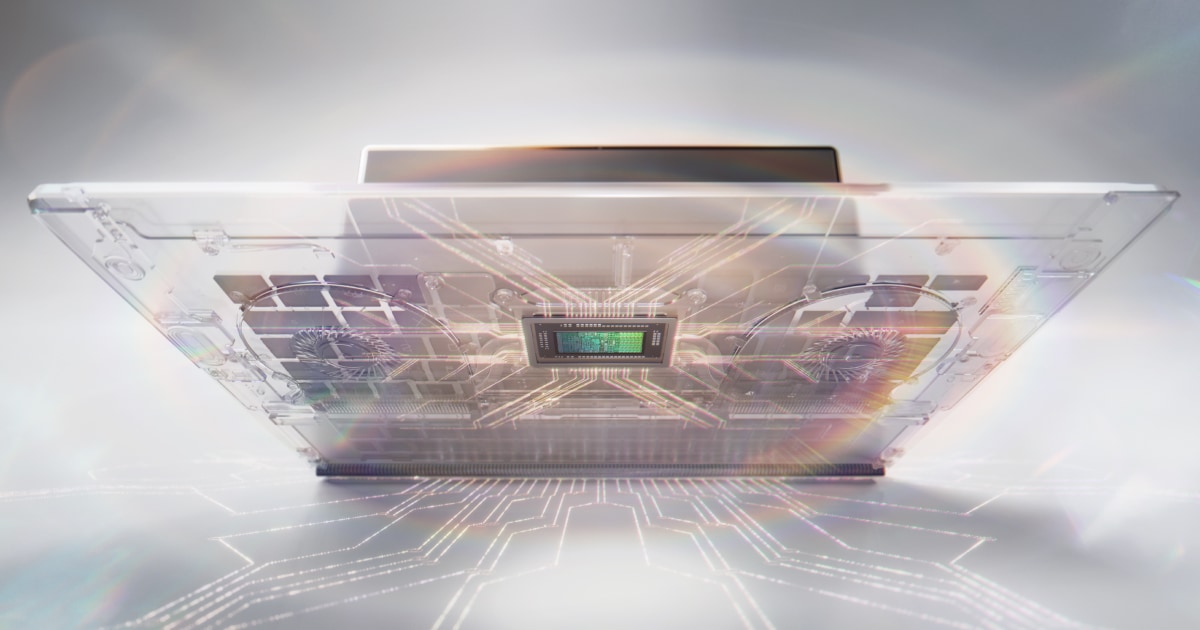
Most gaming laptops pair an Intel or AMD processor with a separate Nvidia graphics card. RTX Spark merges the two. Nvidia developed it with MediaTek, and it comes in two tiers.
 Image: Zerocade
The top chip has a 20-core Grace CPU and a Blackwell GPU with 6,144 CUDA cores, the same count as a desktop RTX 5070. The lower tier has 18 CPU cores and 5,120 GPU cores, and the cheapest laptops use it. Memory is LPDDR5X, shared between CPU and graphics the way Apple's Macs and AMD's Ryzen AI Max chips work. Our unified memory explainer covers why that matters.
Nvidia pitches it as an AI machine as much as a gaming one, quoting up to 1 petaflop of AI performance at low FP4 precision. With 128GB of memory the graphics can reach, it can run local AI models far too big for a normal 8GB or 12GB laptop GPU.
The laptops and their US prices
 Image: Zerocade
Those are starting prices. Memory is where it climbs fast: The Verge reported the ASUS ProArt P16 with the top chip, 128GB and 2TB at $6,999.99, about ₹6.65 lakh converted. In the UK, Expert Reviews priced that same configuration at £6,000 and expects base models around £2,500. A compact RTX Spark Dev Box desktop with 128GB and 2TB follows in November at $5,999.99.
The gaming catch
The CPU uses Arm, the same instruction set as phone chips. Windows on Arm can run regular x86 PC games through Microsoft's Prism translation layer, and many work well. Our x86 vs Arm explainer explains how that works.
Anti-cheat is the sticking point. Kernel-level anti-cheat runs deep inside Windows, and translation can't reach it, so each one needs a native Arm version. Easy Anti-Cheat, BattlEye and Denuvo have been updated, and EA moved its own system over to make Apex Legends work at launch. Nvidia's day-one list also includes Arc Raiders, The Finals, F1 25 and ANNO 117. More than 20 publishers have pledged support, including Riot, Ubisoft, Capcom and Xbox, and Nvidia says Call of Duty arrives in 2027.
Expert Reviews' testing named PUBG, League of Legends and Valorant among the games that don't run. EA's Javelin anti-cheat isn't supported yet either, which rules out Battlefield 6 and EA Sports FC for now.
That list matters a lot in India. Valorant is one of the country's biggest PC games, and PUBG's PC version still has a following. Riot is a named partner, but there's no date for Valorant.
How it performs, briefly
The first reviews landed on October 16. The short version: excellent for local AI and creative work, a step behind a regular RTX 5070 laptop in games, with battery life that's good but not Mac-level. Scores from 3.5/5 to 9/10 show how much depends on what you need. Our RTX Spark review roundup has the numbers.
What it means for India, on paper
Neither Nvidia nor any of the six laptop makers has announced an India date or price. Some Indian price sites list "expected" figures, but those are estimates. ASUS and HP both sell their ProArt and OmniBook lines in India, so they're the likeliest early arrivals, though that's our guess, not anything announced.
When prices do arrive, expect them above a straight conversion once GST and import costs are added. At roughly ₹2.5 lakh and up, this is a high-end creator and AI laptop that can also game. For the same money, an Indian buyer can get a gaming laptop with an RTX 5070 Ti or better that runs every game, Valorant included.
What to watch: an India launch from ASUS, HP or Microsoft, and whether Riot gives Valorant an Arm anti-cheat date.