The short version
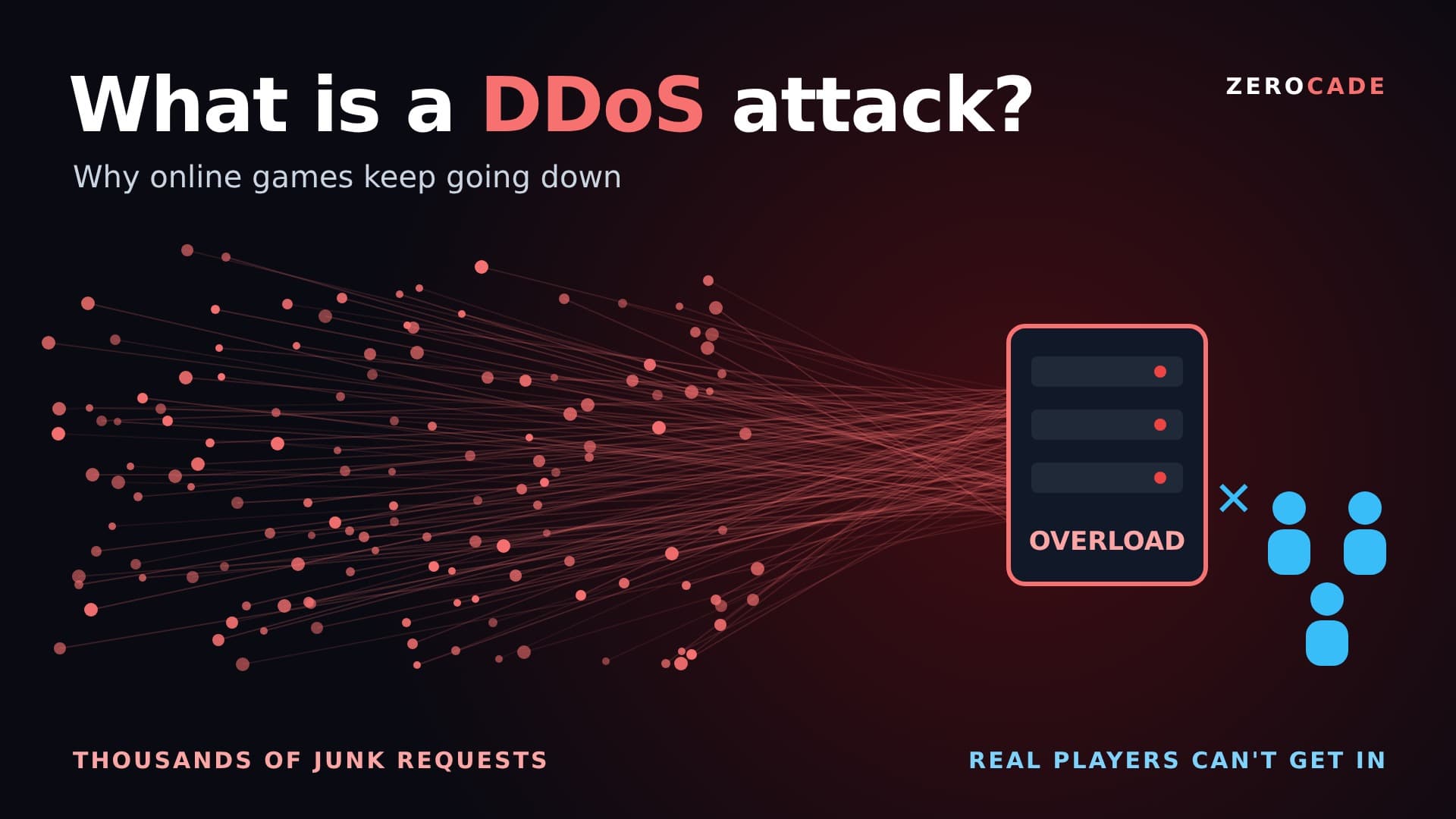
- A DDoS attack floods a server with so much junk traffic that real players can't get through.
- Gears of War: E-Day was hit at the weekend. Players had trouble logging in, finding matches and staying connected.
- It isn't hacking in the usual sense. No accounts or data are stolen. The servers are just swamped.
- Studios fight back with filtering services that spot and drop the fake traffic, but big attacks can still get through for a while.
What happened to Gears
Over the weekend, Gears of War: E-Day players reported login problems, failed matchmaking and disconnects mid-match. On October 12, The Coalition said the issues were "due to distributed denial-of-service (DDoS) attacks targeting our online services". The studio said it was still monitoring and mitigating the attacks. (Our E-Day launch post covers the game itself.)
How a DDoS works
Think of a game server like a toll booth on a highway. It can handle a certain number of cars a minute. A DDoS attack sends thousands of fake cars at once, so the real ones get stuck in the jam.
The "distributed" part is the key. The traffic doesn't come from one computer, which would be easy to block. It comes from thousands of hacked devices at once, often called a botnet. These can be home routers, cameras and other gadgets whose owners have no idea they're involved. Because the traffic arrives from everywhere, it's hard to separate from real players.
Why games get targeted
Online games make easy, visible targets. A new launch has lots of players, a lot of attention and servers that are already busy. Attackers' motives range from showing off to extortion. Sometimes it's just a grudge against a game or a rival player.
How studios fight back
Most big games sit behind protection services that filter traffic before it reaches the game servers. These look for patterns that real players don't produce, then drop the junk. Studios can also add server capacity or move traffic between data centres.
None of it is instant. Attackers change tactics, and filters have to adapt, which is why outages can come and go over a weekend.
What you can do
Not much, honestly. A DDoS doesn't put your account at risk, so there's no need to change your password. Check the game's official social accounts for status updates, and wait it out.
Images: Zerocade.