The short version
- A dev kit is a special version of a console that studios use to build and debug games. It has more memory than the retail console and runs unfinished code.
- On November 9, Shift Up CTO DongKi Lee, who led Stellar Blade's engineering, said his team would do its best on the next-gen Xbox Helix if it gets dev kits in Korea early.
- Microsoft plans to ship alpha Helix kits to developers starting in 2027.
- Studios get kits through each platform's developer programme, under NDA. Sony now lends PS5 kits free to new partners.
What Shift Up's CTO said
Lee was on the closing panel of the Console Game Developers Conference in Seoul on November 9, alongside Tekken's Katsuhiro Harada, Danganronpa creator Kazutaka Kodaka, CD Projekt Red's Pawel Sasko and RimWorld's Tynan Sylvester, with former PlayStation executive Shuhei Yoshida moderating.
According to Inven Global's translation, Lee said he was personally looking forward to the next-gen Xbox, Helix. From an engineer's point of view, he said, if Microsoft provides a dev kit in Korea "as early as possible", Shift Up will put its best effort into developing for it.
That's enthusiasm, not an announcement. Shift Up hasn't confirmed any game for Helix, or for current Xbox consoles. Stellar Blade came out on PS5 in April 2024, on PC in June 2025 and on Switch 2 on November 5, 2026, and analysts estimate it has sold 5 to 6 million copies. Shift Up hasn't confirmed a figure.
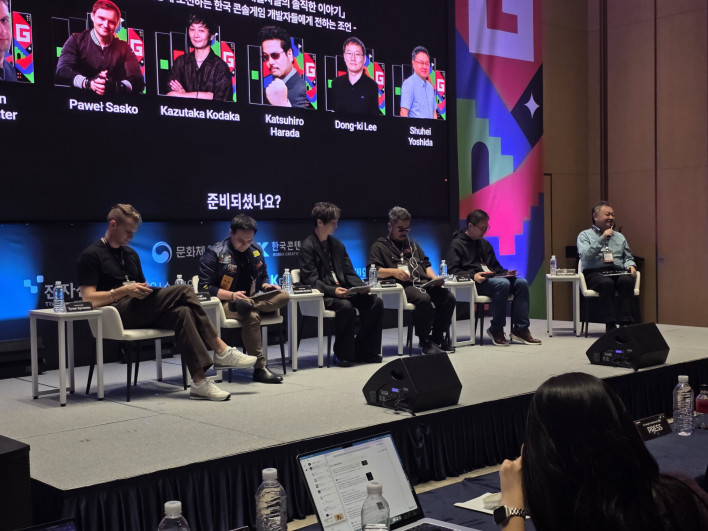
Image: Inven
Lee also explained why kits matter. Stellar Blade was his first console game, and Shift Up built it on PC first, then expanded one platform at a time. The Switch 2 version wasn't planned from the start, so the team had to tune it on the hardware: it kept Eve's character detail intact, cut background detail, and accepted that her hair looks worse at the lower resolution. That's the kind of work you can only do with the real machine.
What a dev kit actually is
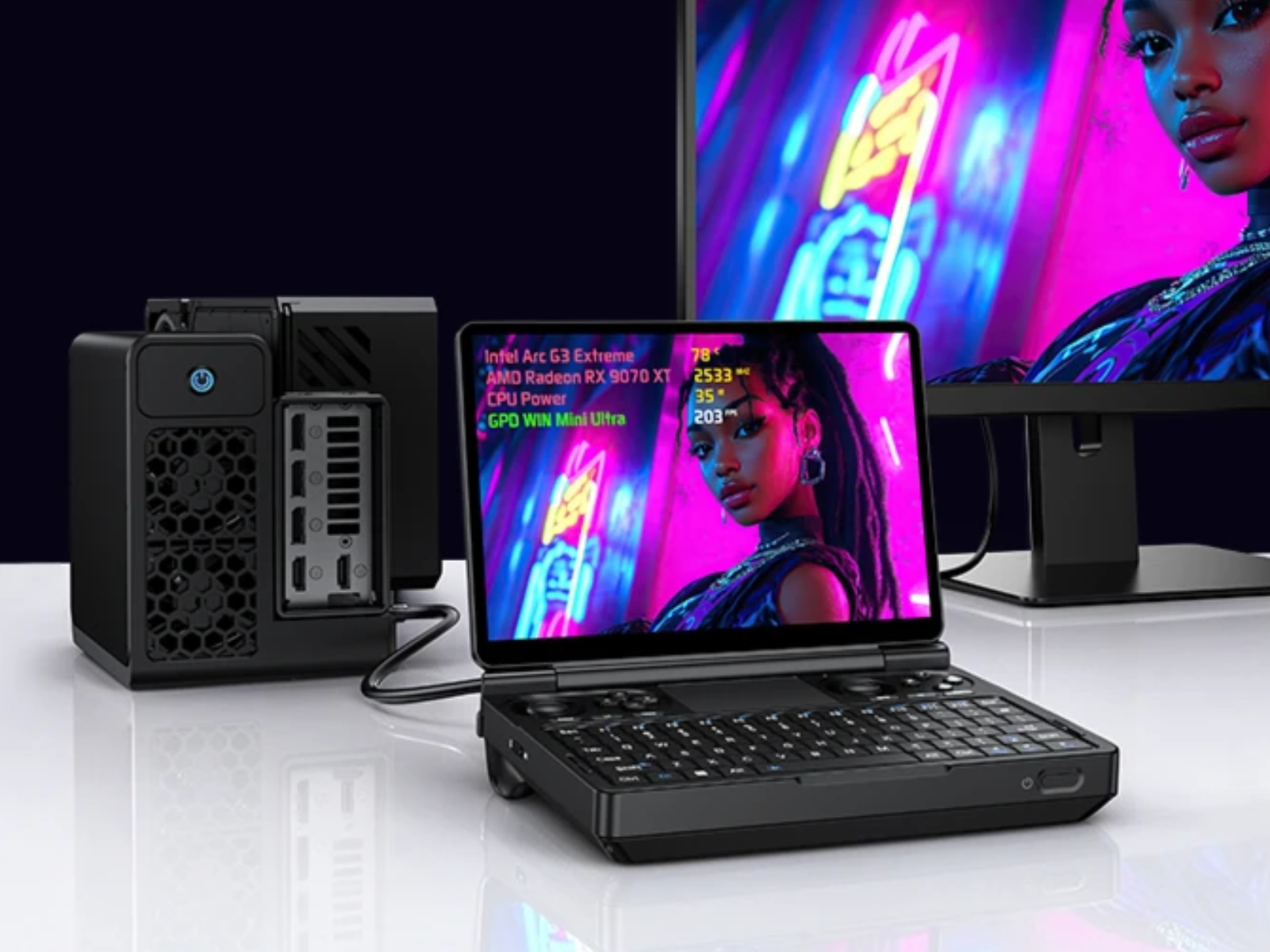
The console you buy only runs finished, signed games from the store or a disc. A dev kit is built for the messy part before that.
- More memory. The Xbox Series X dev kit has 40GB of GDDR6, against 16GB in the retail console, per a Tom's Hardware teardown. The extra room runs debugging tools in the background, holds unoptimised code and leaves space for test data.
- Runs unsigned builds. Studios can load work-in-progress versions straight from their PCs.
- Debug and network features. Extra ports, status displays and buttons let developers connect tools, step through code and capture performance data.
- Different looks. Dev kits often look nothing like the retail box. The PS5's V-shaped dev kit leaked in October 2019, a year before launch, and the Series X kit looked more like the older Xbox One X kit than the final tower.
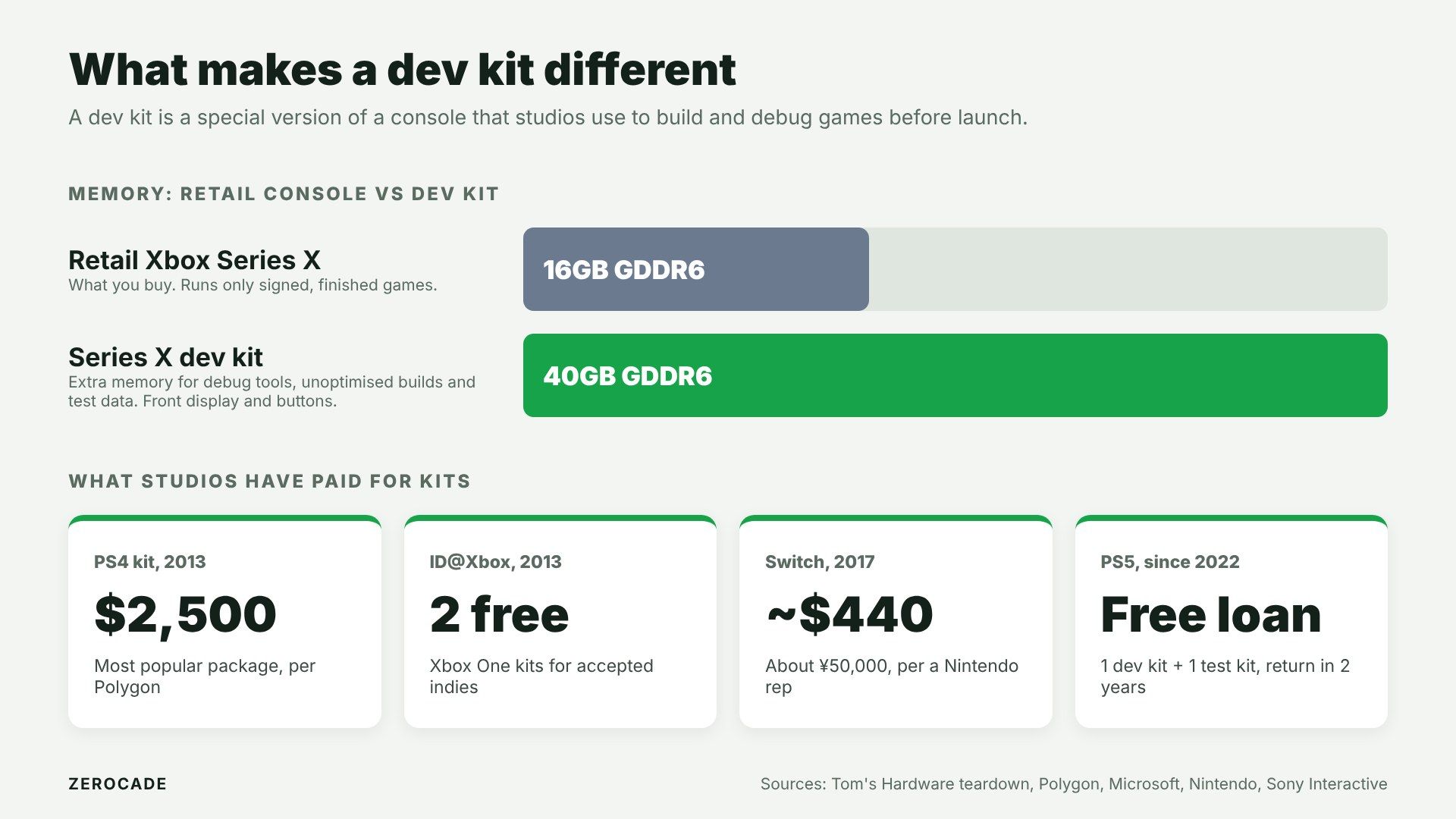
Image: Zerocade
Dev kits vs test kits
Sony talks about two kinds of hardware: a development kit and a test kit. The dev kit is for building and debugging. A test kit runs builds much closer to the final retail version and is used for quality testing and the platform's certification checks before a game is approved for sale.
The odd one out: Xbox Dev Mode
Since 2016, Microsoft has let you turn a retail Xbox One, and now an Xbox Series X|S, into a basic dev kit with the Dev Mode app. It's limited to apps and games built with Microsoft's UWP tools, you can't play retail games while it's on, and selling a game on the Xbox store still needs approval through ID@Xbox. It's a way in for hobbyists and small teams, not a replacement for real kits.
How studios get one
Each platform holder runs its own programme, and all of them work under non-disclosure agreements:
- PlayStation: studios register at PlayStation Partners. Since July 2022, newly registered partners whose game concept is accepted can borrow one PS5 dev kit and one test kit for free, and return them within two years. Back in 2013, Polygon reported the most popular PS4 dev kit package cost $2,500, roughly ₹2.1 lakh today.
- Xbox: the ID@Xbox programme for independent studios launched in 2013 with two free Xbox One dev kits for accepted developers.
- Nintendo: studios sign up on the Nintendo Developer Portal and accept its NDA. In 2017, a Nintendo representative put the Switch dev kit at about ¥50,000, around $440 at the time.
Indian studios go through the same doors. Sony's India Hero Project, launched in 2023, funds and mentors local studios that can register as PlayStation developers, with games like Fishbowl already out and Mukti and Suri: The Seventh Note in the works.
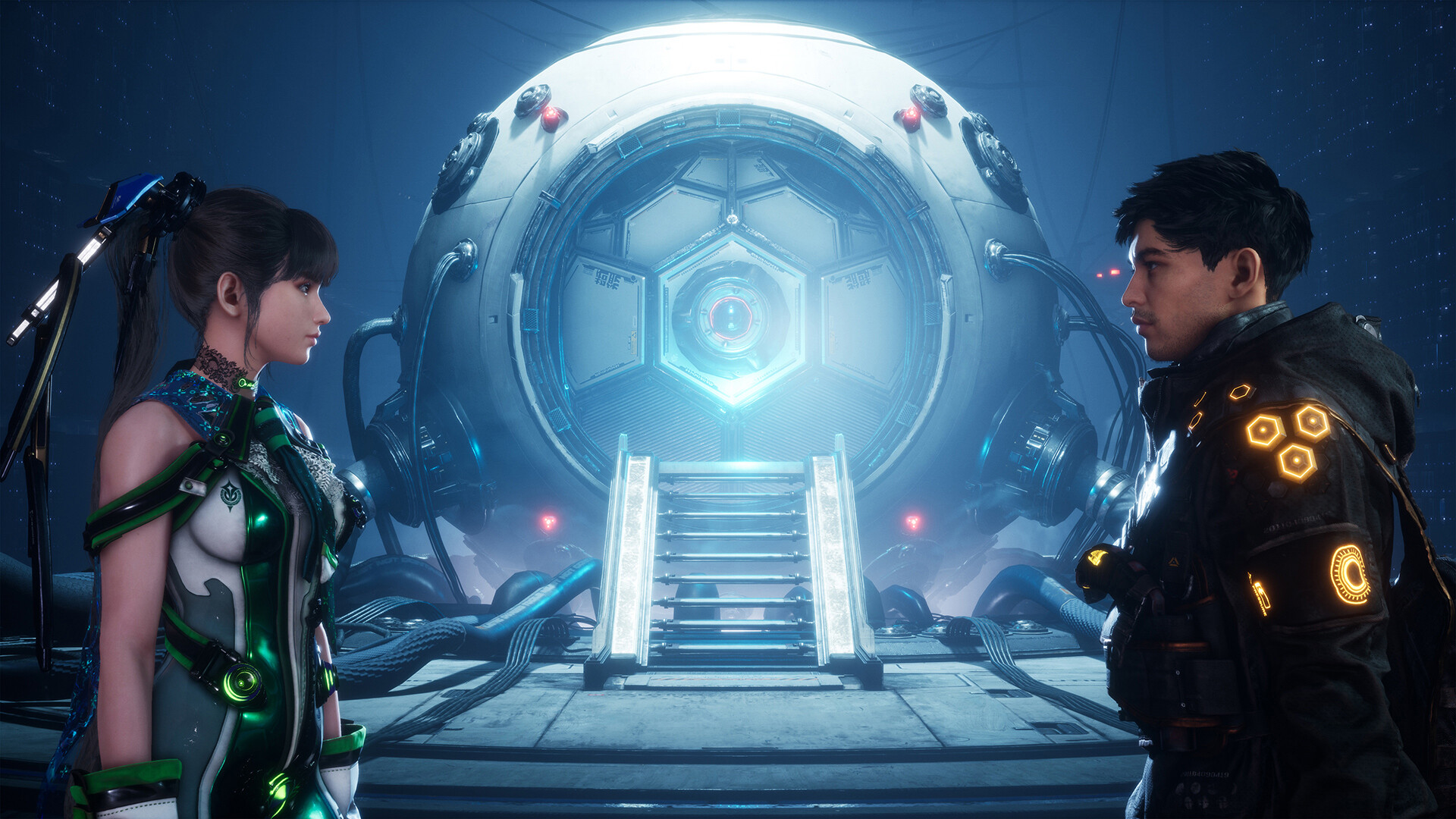
Image: Shift Up / Sony Interactive Entertainment
When studios get them, and why timing matters
Kits usually reach big studios well before a console is announced. When Sony's Mark Cerny first described the PS5 in April 2019, dev kits were already in studios, a year and a half before launch. Early kits are often alpha hardware, close to the final design but not finished, followed by beta kits nearer launch.
The Switch 2 shows what happens when kits are scarce. In 2025, Digital Foundry reported that many small and mid-size studios couldn't get Switch 2 kits, with some told to release on the original Switch and rely on backward compatibility instead. Nintendo didn't give a reason, though reports pointed to keeping leaks down. The result was fewer third-party games at launch than those studios wanted.
For Helix, Microsoft's Jason Ronald said in March that alpha hardware would ship to developers starting in 2027. Microsoft hasn't given a launch date. Our earlier report on what Xbox has said about Helix covers the rest.
What to watch
Watch for Helix alpha kits to start arriving in 2027, and for which studios say they've got them. Lee's comments are a reminder that the games you see at a console's launch were decided years earlier, by who had kits in time.