The short version
- Role Queue makes you pick a role, like tank, damage or support, before you queue. Every team gets the same fixed mix. Open Queue lets anyone play anything.
- 5v5 and 6v6 are team sizes. Overwatch launched as 6v6, cut a tank to go 5v5 in 2022, and has been adding 6v6 back since.
- From December 8, Overwatch Competitive will offer 2-2-2 Role Queue 6v6 for four weeks, alongside 5v5 and Open Queue 6v6.
- The catch is always the same: too few people want to play tank, so locking two tanks per team makes queues longer.
Why this came up
In a Director's Take post on November 10, Overwatch game director Aaron Keller confirmed that Season 6 will open with three Competitive choices: standard 5v5, Open Queue 6v6, and a new 2-2-2 Role Queue 6v6 "mini season" for the first four weeks. A separate 6v6 balance patch comes with it, because heroes tuned for 5v5 had been carrying that balance into 6v6.
Keller was frank about the risk: queue times "could increase significantly". He also called 6v6 "a second among equals" next to 5v5, and joked that players shouldn't start asking for 7v7.
How Role Queue works, step by step
- You pick a role first. Tank, damage or support, or flex if you'll play any.
- You get a rating per role. Overwatch tracks your skill separately for each role, so a great support player isn't thrown into high-ranked tank games.
- The matchmaker fills slots, not just teams. In 2-2-2, it needs exactly two tanks, two damage and two supports on each side, all at similar skill. Our skill-based matchmaking explainer covers how that rating works.
- The scarcest role sets the wait. Damage is the most popular role, so damage players wait longest. If tanks are scarce too, everyone waits.
- Incentives fill gaps. Overwatch 1 added a Priority Pass in 2020: queue as flex, earn passes, and spend them to skip ahead in the damage queue later.
Open Queue skips all of this. The matchmaker only needs players of similar skill, so games start faster. The cost is unpredictable teams: Blizzard itself has pointed to matches with no tanks at all, or six damage heroes.
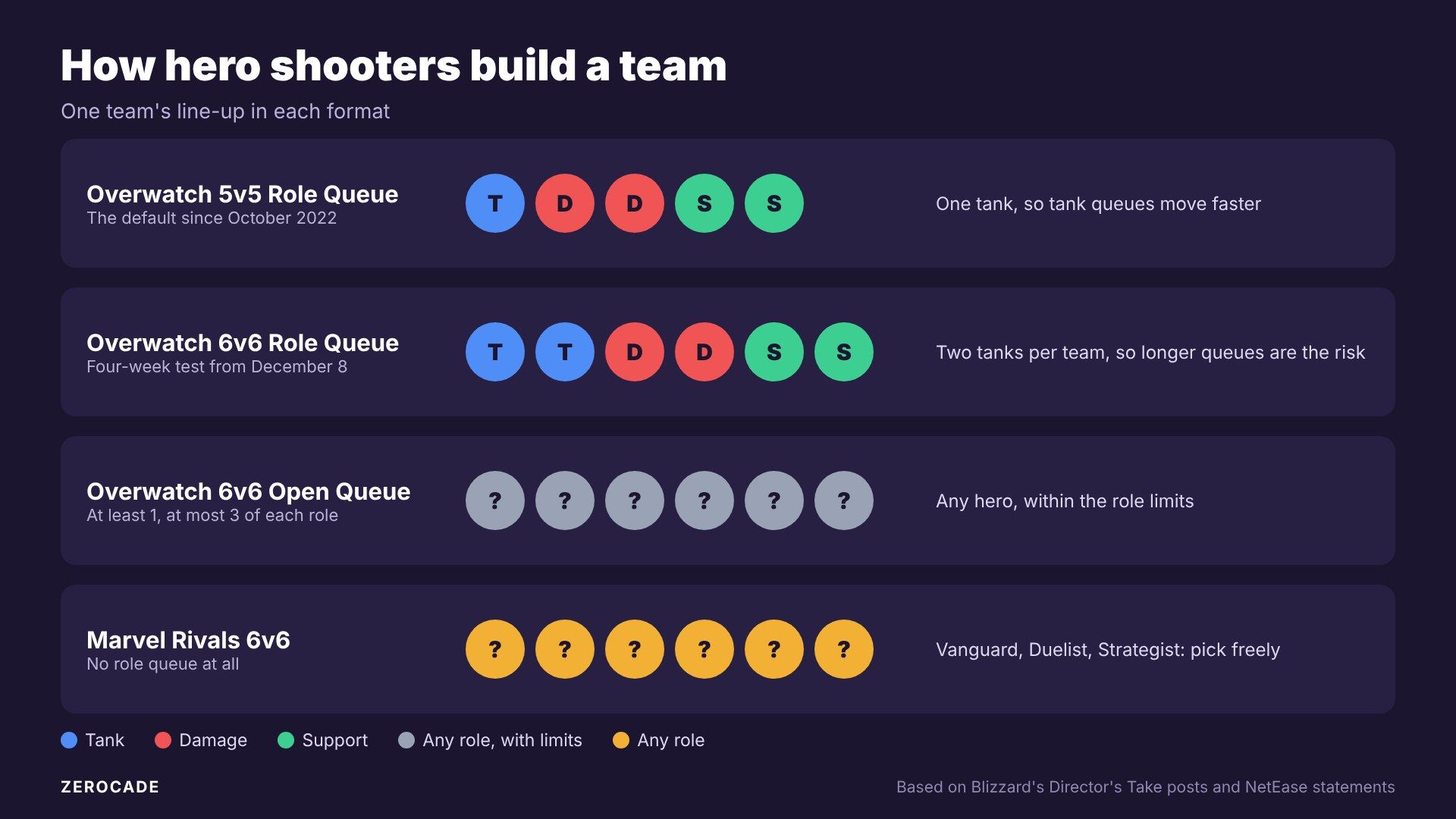
Image: Zerocade
A short history of Overwatch's team formats
- 2016: Overwatch launches as 6v6 with no limits at all. Within months, Competitive limits teams to one of each hero.
- 2019: Role Queue arrives with a 2-2-2 lock and per-role ratings. It ended the "GOATS" era, when top teams ran three tanks and three supports with no damage heroes.
- October 2022: Overwatch 2 goes free-to-play and drops to 5v5, with one tank. Blizzard said it wanted faster fights and less for players to track, and fewer tank slots meant shorter queues.
- December 2024: Blizzard starts testing 6v6 again, first as Open Queue with at least one and at most three of each role, then classic 2-2-2.
- 2025-2026: 6v6 Open Queue becomes a permanent Competitive option. Two 2026 experiments tried to fix the tank shortage: Flex Queue, with one tank and three damage players who could switch to tank, and Dynamic Queue, which switched to that format when too few tanks were queued.
By June 2026, 5v5 Role Queue still held about 54% of daily Unranked players and 37% in Ranked. Open Queue 6v6 had about 19% and 8%. In Season 5, Open Queue 6v6 was the second most-played mode.
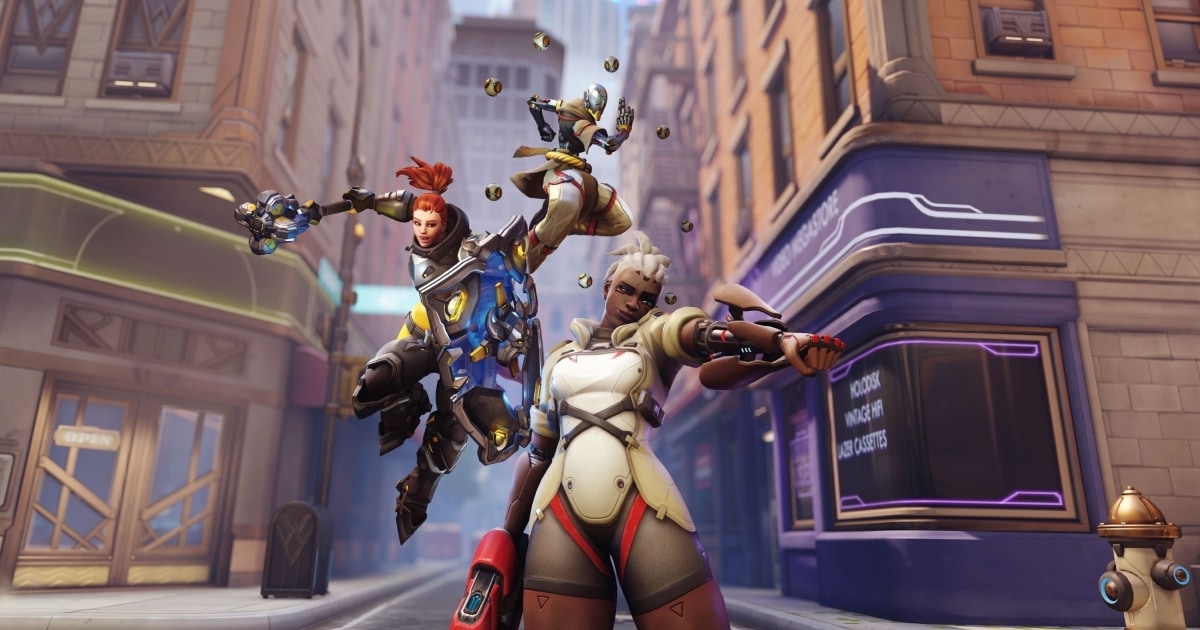
Image: Blizzard Entertainment
Why 5v5 vs 6v6 matters so much
It sounds like one extra player. In practice it changes how the game plays:
- Tanks. In 5v5, a lone tank has to absorb everything, so tanks were made bigger and tougher. In 6v6, two tanks share the load and can combo abilities, so each one can be weaker.
- Pace. Fewer players means fewer shields and heals, so 5v5 fights tend to be faster and more lethal.
- Readability. With 12 players and their abilities on screen, 6v6 is busier. That was one of Blizzard's reasons for 5v5.
- Queues. Every extra tank slot multiplies the hardest role to fill. That's why Role Queue 6v6 is only a four-week test for now.
Marvel Rivals: 6v6 with no role lock
Marvel Rivals, NetEase's free hero shooter, launched in December 2024 as 6v6 with no role queue. Its roles are Vanguard, Duelist and Strategist, roughly tank, damage and support. Creative director Guangyun Chen said in January 2025 that no role queue would "lead to a richer gaming experience", relying on hero design and Team-Up abilities to keep teams workable.
So far it has held that line. Role rules only exist in custom modes, added in April 2026.
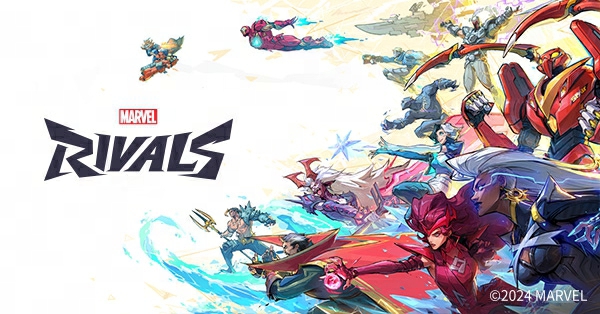
Image: NetEase Games / Marvel
Which is better?
There's no single right answer, which is why Blizzard now plans to keep several formats running side by side. On paper, Role Queue suits players who want balanced teams and a fair rating for their main role. Open Queue suits players who want short waits and the freedom to counter-pick mid-match.
Both games are free to play. Overwatch's premium battle pass costs 1,000 Overwatch Coins, about $10, while Marvel Rivals' Luxury pass costs about the same.
What to watch
When the Role Queue 6v6 test starts on December 8, watch the tank queue times Blizzard reports and whether it extends the mode past four weeks. If queues hold up, 2-2-2 could become a permanent Competitive option again, nearly seven years after it first arrived.